
Quick hitch coupler, also known as a quick coupler, is a mechanical or hydraulic device installed at the end of an excavator’s dipper arm. Its primary function is to connect and disconnect various attachments such as buckets, breakers, grapples, augers, and rippers quickly and safely. Traditionally, changing attachments required manual pin removal and reinstallation, a time-consuming and potentially dangerous process. Quick hitch couplers eliminate most of these issues.
The growing demand for quick hitch couplers is driven by increased jobsite efficiency, reduced downtime, improved operator safety, and lower labor costs. However, not all quick hitch couplers are the same. Different types are designed for different machine sizes applications requirements.
1. Manual Quick Hitch Couplers
Manual quick hitch couplers are the most basic and cost-effective option available. As the name suggests, these couplers require manual intervention to lock and unlock attachments. Typically, the operator must leave the cab and use a wrench or lever to secure the locking mechanism.
One of the main advantages of manual quick hitch couplers is their simplicity. They have fewer moving parts, making them easier to maintain and less prone to hydraulic or electrical failure. They are also significantly cheaper than hydraulic or fully automatic systems, which makes them popular among small contractors and rental companies.
However, manual quick hitch couplers have clear drawbacks. Attachment changes still require downtime, and operators must exit the cab. In fast-paced construction environments where attachments are changed frequently, manual couplers may not be the most efficient solution.
2. Mechanical Quick Hitch Couplers
Mechanical quick hitch couplers are a step up from basic manual systems. While they still require some manual action, the attachment process is generally quicker and more secure. These couplers often use a spring-loaded or cam-lock mechanism that automatically aligns the attachment pins when the excavator arm is positioned correctly.
Mechanical couplers are valued for their durability and reliability. They do not rely on hydraulics, which makes them suitable for harsh environments where hydraulic systems may be vulnerable to damage or contamination. They are also relatively easy to retrofit onto existing excavators.
The main limitation of mechanical quick hitch couplers is that they still require the operator to leave the cab to complete the locking process. While faster than manual pin systems, they cannot match the convenience and speed of hydraulic solutions.
3. Hydraulic Quick Hitch Couplers
Hydraulic quick hitch couplers are among the most popular options in today’s market. These couplers are powered by the excavator’s hydraulic system, allowing the operator to change attachments from inside the cab using a simple control switch.
The biggest advantage of hydraulic couplers is efficiency. Attachment changes can be completed in seconds, significantly reducing downtime and increasing productivity. They also enhance safety by minimizing the need for manual handling and reducing exposure to pinch points and heavy components.
Hydraulic quick hitch couplers are ideal for contractors who frequently switch between multiple attachments throughout the workday. They are commonly used in large-scale construction, demolition, and infrastructure projects. Are you looking for the hydraulic quick hitch coupler for your excavator? Please get in touch with us to get more details and a free quotation if you need.
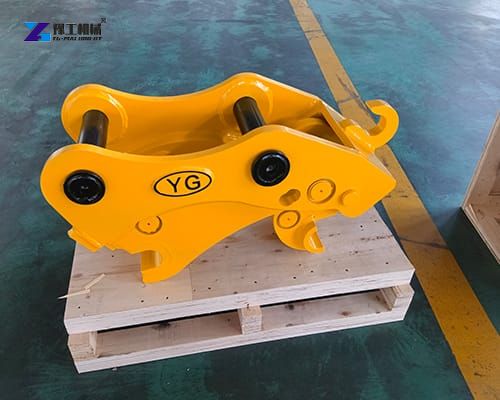
4. Fully Automatic Quick Hitch Couplers
Fully automatic quick hitch couplers represent the most advanced technology in attachment systems. These couplers not only allow attachment changes from within the cab but also automatically detect and lock onto attachments without manual alignment.
One of the key features of fully automatic couplers is enhanced safety. Many models include dual-locking systems, visual indicators, and sensor-based confirmation to ensure the attachment is securely engaged. Some systems even prevent machine operation if the attachment is not properly locked.
Fully automatic quick hitch couplers are ideal for high-end excavators and operators who prioritize maximum efficiency and safety. They are commonly used in regulated markets where strict safety standards apply.
The main disadvantage is cost. Fully automatic systems are the most expensive option and may require specialized attachments designed to work with the coupler. However, for many large contractors, the productivity gains and safety improvements justify the investment.
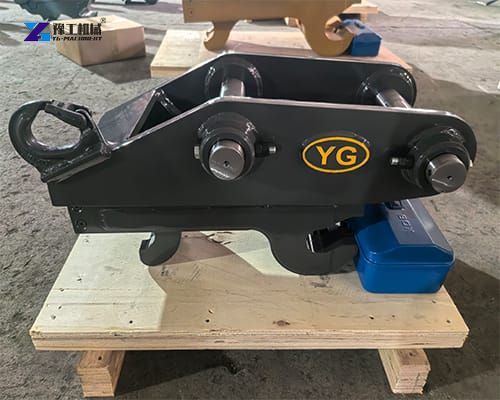
5. Pin Grabber Quick Hitch Couplers
Pin grabber quick hitch couplers are designed to grab the attachment pins directly, rather than relying on a fixed pin spacing. This makes them extremely versatile, as they can accommodate a wide range of attachments without modification.
One of the biggest advantages of pin grabber couplers is compatibility. Contractors who use attachments from different manufacturers or older equipment benefit greatly from this flexibility. Pin grabber couplers are available in both mechanical and hydraulic versions, offering options for different budgets and applications.