
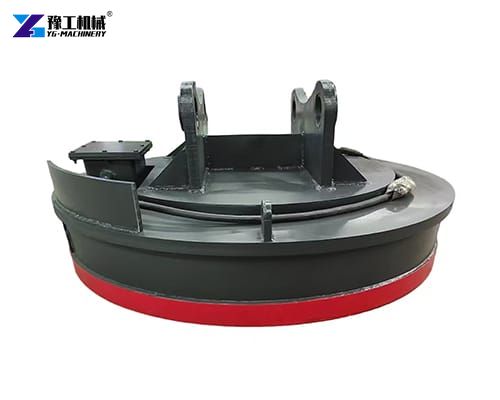
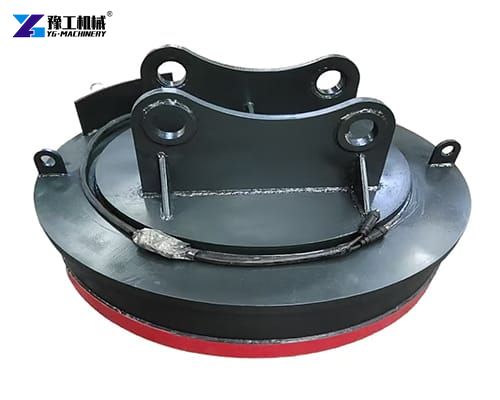
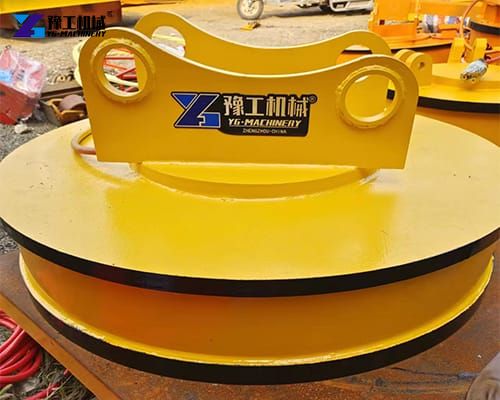
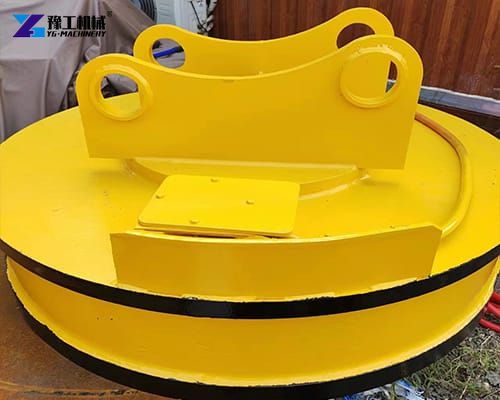
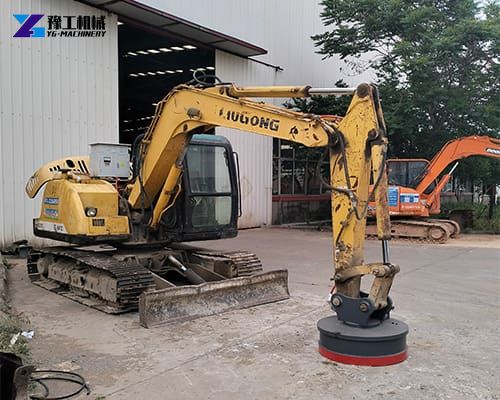
Excavator magnet for sale is a heavy-duty attachment designed to be mounted on an excavator to lift, move, and sort ferrous metal materials. Instead of relying on manual labor or mechanical grapples alone, this magnetic attachment uses electromagnetic or permanent magnetic force to pick up steel debris quickly and securely. Excavator magnets are widely used in scrap yards, demolition sites, recycling plants, steel mills, rail maintenance, shipbreaking operations, and disaster cleanup projects. They allow operators to handle sharp, irregular, or hazardous metal objects without direct human contact.
Features of Excavator Magnet for Sale
- High Lifting Capacity
Industrial magnets are engineered to generate strong magnetic fields capable of lifting heavy steel plates, beams, pipes, rebar bundles, and mixed scrap. - Durable Construction
Most models are built with wear-resistant steel housings that withstand impacts, abrasion, and harsh environmental conditions. - Energy Efficiency
Advanced electromagnetic systems minimize power consumption while maintaining high performance, reducing operating costs over time. - Quick Installation
Many designs integrate with quick coupler systems, allowing fast attachment changes between buckets, grapples, and magnets. - Safety Mechanisms
Modern units include backup power supplies or battery systems to prevent accidental load drops during power interruptions. - Versatile Control Options
Operators can control magnet activation from the cab, improving precision and reducing the need for ground personnel.
Excavator Magnet Common Uses Across Industries
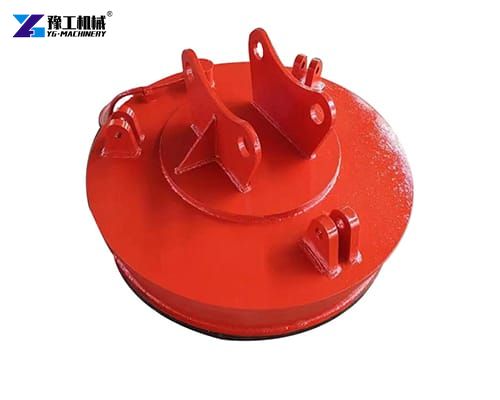
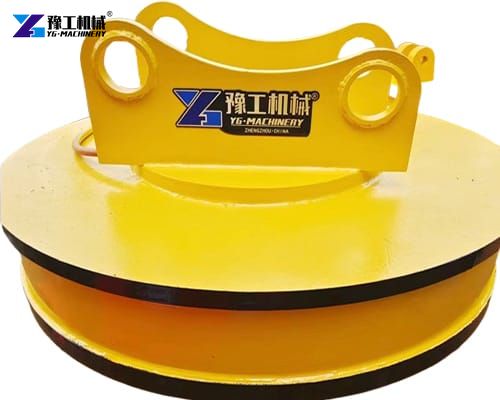
The excavator magnet for sale is one of the most versatile attachments available. Its applications extend far beyond scrap handling.
- Scrap Metal Recycling: Magnets rapidly collect loose ferrous scrap from yards, sorting facilities, and processing lines.
- Demolition Projects: After structural teardown, magnets remove nails, rebar, steel fragments, and debris from the site, speeding cleanup.
- Construction Site Management: They help clear reinforcing steel offcuts, misplaced tools, and metal waste, keeping sites safer and more organised.
- Railway Maintenance: Magnets retrieve spikes, plates, and other steel components during track repair or replacement.
- Port and Shipyard Operations: Heavy steel cargo, ship scrap, and fabrication waste can be handled efficiently.
- Disaster Recovery: After storms, earthquakes, or industrial accidents, magnets assist in removing hazardous metal debris from affected areas.
Excavator Magnet Attachment Advantages
- Improved Productivity: Magnets can pick up multiple small items simultaneously, drastically reducing handling time.
- Enhanced Worker Safety: Eliminating manual contact with sharp or unstable metal pieces lowers injury risk.
- Lower Labor Requirements: Fewer workers are needed for sorting and loading operations.
- Cleaner Worksites: Magnets collect even small fragments that are difficult to grasp with conventional tools.
- Reduced Equipment Wear: Compared with grapples dragging material across surfaces, excavator magnet for sale minimizes abrasion on machines and infrastructure.
Structural Composition and Materials
- The Outer Shell
The casing is usually made of cast steel or heavy-duty welded plates. The bottom plate, which comes into contact with the scrap, is typically made of high-manganese steel, which actually becomes tougher as it is subjected to impact. - The Internal Coil
The heart of the magnet is the coil. It is usually made of aluminum or copper. Copper offers better conductivity and efficiency, while aluminum is lighter and more cost-effective. - The Filling Compound
The space between the coil and the shell is filled with an insulating compound. This protects the coil from moisture and helps conduct heat away from the center of the magnet. - The Control Box
This is the brain of the operation. It regulates the voltage, manages the “drop” cycle, and protects the system from power surges.
How Does the Excavator Magnet Work? – The Working Principle
The physics behind an excavator magnet is based on electromagnetism. When an electric current flows through a wire, it creates a magnetic field. By wrapping that wire into a coil around a ferrous core, that field is intensified.
- The Power Source
For hydraulic magnets, the excavator’s hydraulic oil turns a motor, which spins a generator. This generator produces direct current. - Energizing the Coil
When the operator toggles a switch in the cab, the DC power is sent to the magnet’s coil. This creates a powerful magnetic field that pulls ferrous objects toward the bottom plate. - The Release Phase
Dropping the load isn’t as simple as turning off the power. Residual magnetism often keeps the metal stuck to the plate. To solve this, the controller briefly reverses the polarity of the current, effectively “pushing” the metal away for an instantaneous release.
Essential Selection Guide: What to Look for When Buying
Buying an excavator magnet is a significant capital expenditure. Do not make the mistake of buying based on price alone. Consider these factors:
- Lift Capacity
Manufacturers provide lift ratings for “solid slabs” versus “scrap metal.” Always look at the scrap metal rating, as it is a more realistic representation of daily use. - Diameter and Weight
The magnet must be matched to the size of your excavator. A magnet that is too heavy will tip the machine or strain the boom. Conversely, a magnet that is too small will not utilize the excavator’s full potential. - Duty Cycle
The duty cycle refers to the percentage of time a magnet can be “on” without overheating. For heavy scrap yard use, look for a 75 percent or 100 percent duty cycle rating.