
Excavator ripper for sale is a heavy-duty attachment installed at the end of an excavator arm, designed to penetrate, tear, and loosen extremely hard materials. These materials include frozen soil, compacted clay, weathered rock, shale, asphalt, and even light reinforced concrete. Different from buckets that scoop or hydraulic breakers that rely on impact, rippers use concentrated force and leverage to fracture material at its weakest points. This makes the excavator ripper market especially attractive to operators who need reliable performance in challenging ground conditions.
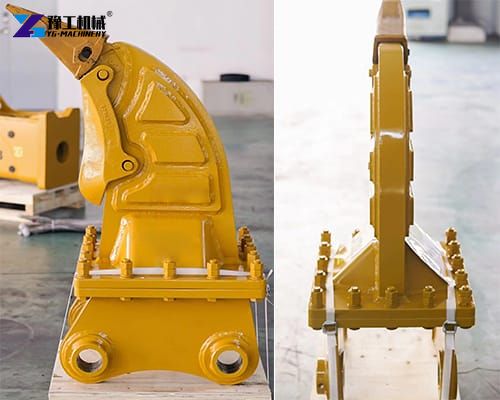
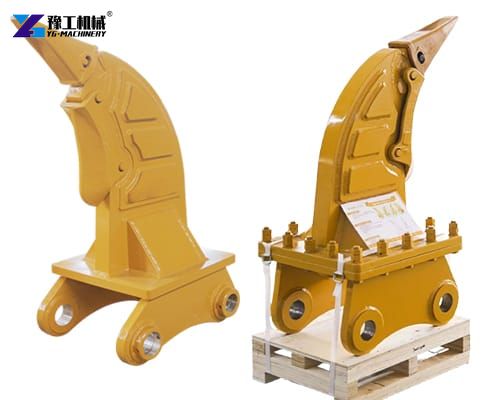
Parameters of YG Excavator Ripper Attachments
| Model | YGR02 | YGR04 | YGR06 | YGR08 | YGR10 | YGR14 |
| suitable excavator | 4-6T | 5-9T | 9-16T | 16-23T | 23-30T | 30-39T |
| pin to pin distance | 265mm | 310mm | 390mm | 465mm | 520mm | 570mm |
| overall width | 375mm | 420mm | 570mm | 665mm | 740mm | 820mm |
| overall height | 390mm | 950mm | 1180mm | 1260mm | 1380mm | 1470mm |
| pin diameter | 40-50mm | 50-55mm | 60-70mm | 70-80mm | 80-90mm | 80-90mm |
| dipper width | 150-180mm | 180-200mm | 200-315mm | 300-350mm | 360-420mm | 360-420mm |
| plate thickness | 50mm | 55mm | 65mm | 80mm | 90mm | 90mm |
| teeth model | DH55type | DH150type | DH220type | D85Ctype | 4T5502-2type | 4T5502-2type |
| weight | 60kg | 160kg | 245kg | 420kg | 620kg | 775kg |
Features of High Quality Excavator Ripper for Sale
- Single Point Force Concentration
The primary feature is the single-shank design. This ensures that the hydraulic pressure from the excavator arm is not distributed across a wide edge but is instead focused on one sharp tip. This allows for deep penetration into materials that would otherwise require blasting or heavy-duty hammers. - Reinforced Shank Body
Because the ripper is subjected to extreme lateral and vertical tension, the shank is usually made from high-strength, abrasion-resistant steel. Quality manufacturers often use Hardox or similar quenched and tempered steels to ensure the attachment does not bend or snap under high pressure. - Replaceable Wear Parts
A ripper is a wear item by nature. The most critical feature to look for is a replaceable boot or tooth. Since the tip encounters the most friction, being able to swap out a worn tooth in the field saves hours of downtime and prevents damage to the main shank structure.
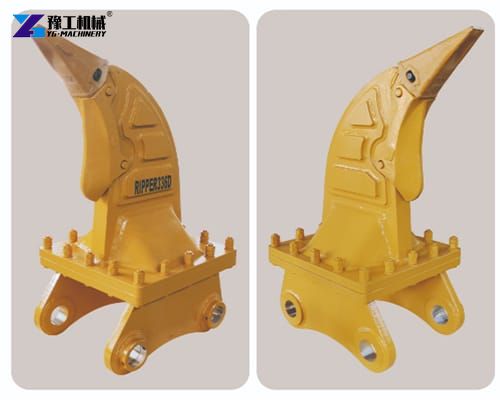
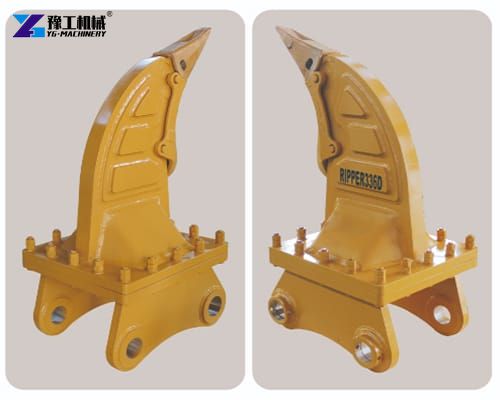
Primary Uses and Wide Applications
The versatility of the excavator ripper for sale makes it a staple in various industries. Here are the most common scenarios where this attachment shines.
- Rock and Frost Ripping
In colder climates, the ground can freeze to the hardness of concrete. A ripper can easily slice through the frost layer, allowing the bucket to follow and remove the loosened earth. Similarly, in rocky terrain, it is used to pull apart layered stone or fractured rock. - Stumping and Land Clearing
Removing large tree stumps is a notorious challenge. A ripper can be driven deep into the root system to slice through thick lateral roots, making it much easier to pry the stump out of the ground without digging a massive, unnecessary hole. - Trenching and Demolition
When laying utility lines through asphalt or compacted gravel, a ripper creates a clean pilot line. In demolition, it can be used to prize up concrete slabs or tear through reinforced structures where a hammer might be too slow.
Advantages of Using An Excavator Ripper Over Other Tools
Why choose a ripper when you could use a hydraulic breaker or a heavy-duty bucket? The advantages are rooted in efficiency and cost-effectiveness.
- Reduced Fuel Consumption
Compared to a hydraulic breaker (hammer), the excavator ripper for sale requires less constant high-flow hydraulic power. The excavator uses its mechanical leverage to pull the ripper through the ground, which is often more fuel-efficient than the rapid-fire percussion of a hammer. - Protection of the Excavator
Using a bucket to pry at rocks puts immense stress on the bucket pins, bushings, and the machine’s cooling system. A ripper is streamlined for this specific task, reducing the “shaking” and vibration felt by the machine and the operator. - Lower Maintenance Costs
A ripper is a “static” attachment with no internal moving parts, making it one of the lowest-maintenance tools in your arsenal.
Structural Components of Excavator Ripper Attachment
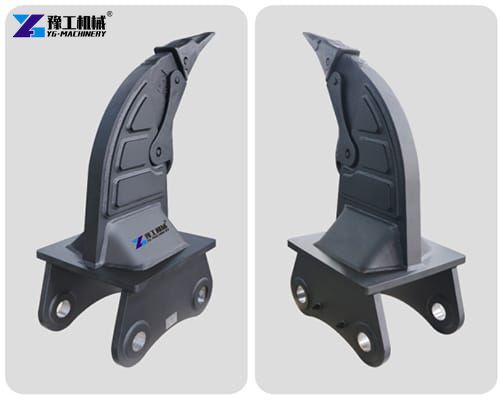
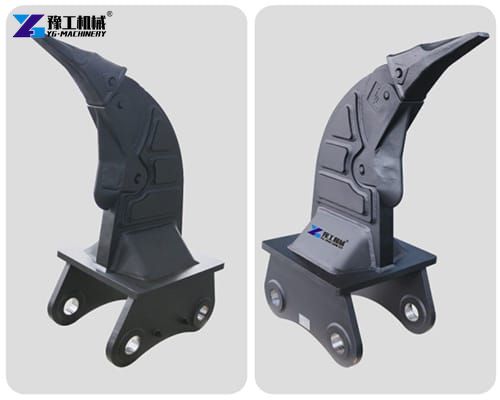
- Mounting Bracket: This is the top section that connects to the excavator’s quick coupler or pins. Precision in the earplate spacing is vital for a tight fit.
- The Shank: The curved “body” of the tool. The curve is mathematically designed to provide the best angle of attack as the arm pulls inward.
- The Nose Piece: The front end of the shank where the tooth is mounted.
- The Ripper Tooth: The sacrificial wear part that makes first contact with the ground.
- Side Protectors: Many heavy-duty rippers include weld-on shrouds on the sides of the shank to prevent the main body from thinning out over time due to abrasion.
How Does the Working Principle Impact Results?
The excavator ripper attachment operates on the principle of mechanical advantage and point pressure.
As the operator extends the dipper arm and tucks the ripper into the ground, the geometry of the attachment converts the hydraulic cylinder’s force into a downward and backward pulling motion. The “hook” shape ensures that as the ripper moves, it naturally wants to pull itself deeper into the substrate.
This is known as the “penetration angle.” If the angle is too blunt, the ripper will bounce. If it is too sharp, it may get stuck or put undue stress on the cylinder. A well-designed excavator ripper for sale will have an optimized curvature that balances ease of entry with maximum breakout force.
Selection Guide: How to Choose The Right Excavator Ripper?
When looking at an excavator ripper attachment, consider these factors to ensure compatibility and performance.
- Machine Weight Class
Rippers are categorized by the tonnage of the excavator. A ripper designed for a 20-ton machine will be far too heavy for a 10-ton machine and will likely snap the pins of a smaller unit. Conversely, putting a small ripper on a large machine will lead to the attachment bending almost instantly. - Material Density
Are you ripping coral, limestone, or frozen clay? For highly abrasive materials, look for a ripper with extra side-wear plates. For deep trenching, you might need a longer shank, though keep in mind that a longer shank reduces the total breakout force at the tip. - Coupler Compatibility
Ensure the ripper is configured for your specific quick coupler. A loose fit will vibrate and cause wear on your excavator’s arm holes.