
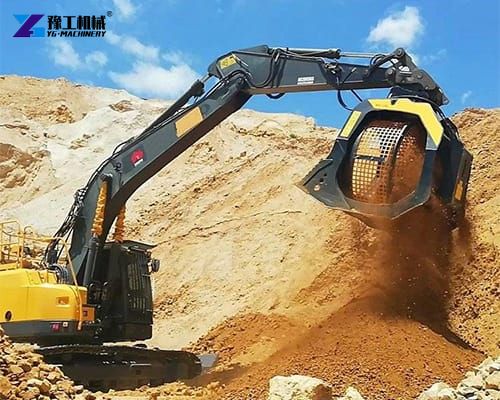
Hydraulic screening bucket is an excavator attachment designed to separate materials of different sizes through rotating shafts, drums, or screening panels powered by the host machine’s hydraulic system. It functions as both a bucket and a screening unit, allowing operators to scoop, screen, and discharge materials in a single process. The rotary screening bucket operates directly at the work site. Materials such as soil, sand, gravel, compost, demolition debris, and recycled aggregates can be processed immediately after excavation. This integration significantly streamlines workflows and reduces the need for additional machinery.
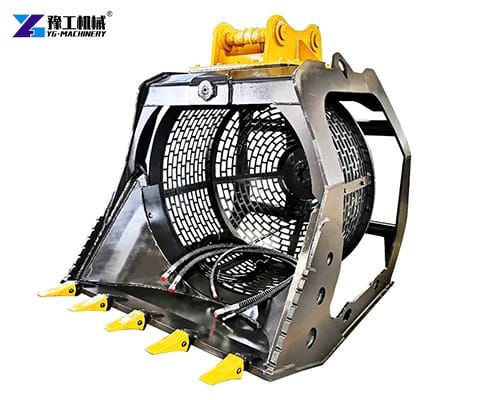
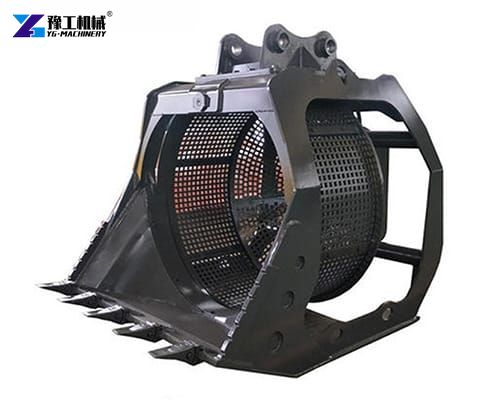
Parameters of the Hydraulic Screening Bucket
| Model | YGS-9 | YGS-15 | YGS-25 | YGS-35 |
| Suitable Excavator | 5–9T | 10–15T | 16–25T | 26–40T |
| Weight | 500KG | 800KG | 1600KG | 2800KG |
| Bucket Capacity | 0.3m³ | 0.4m³ | 1.1m³ | 2m³ |
| Working Pressure | 20Mpa | 20Mpa | 20Mpa | 20Mpa |
| Recommended Flow Rate | 60L/min | 80L/min | 140L/min | 200L/min |
| Screen Size | 5–50 | 5–80 | 5–100 | 5–120 |
Features of Hydraulic Screening Buckets
- One of the most important is hydraulic drive technology, which provides consistent torque and adjustable speed depending on material type. This ensures efficient screening even with wet or mixed materials.
- Another defining feature is modular screening components. Many modern designs allow operators to change screening shafts or panels to achieve different output sizes. This flexibility makes the equipment suitable for a wide range of applications.
- Durability is also a core characteristic. Excavator screening buckets are typically manufactured using high-strength steel and wear-resistant components to withstand abrasive materials and demanding operating environments. Reinforced structures extend service life and reduce maintenance frequency.
- Compact design is equally important. Because the screening system is integrated into the bucket, transportation and setup requirements are minimal. Operators can move between job sites quickly without complex assembly procedures.
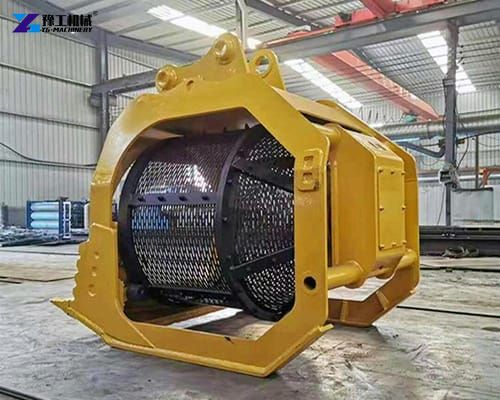
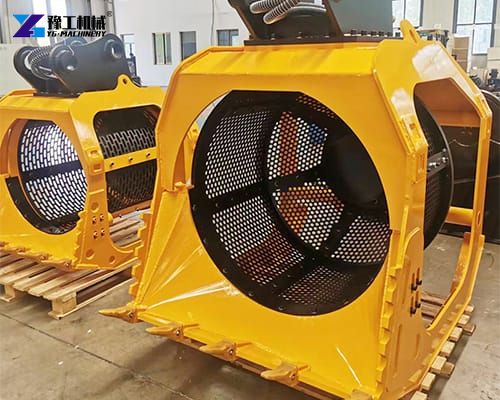
Core Structural Components and Design
- The Main Frame and Shell
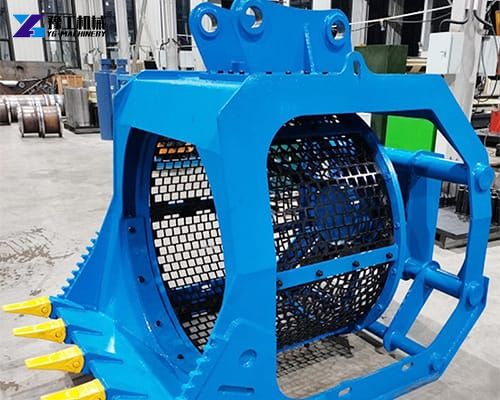
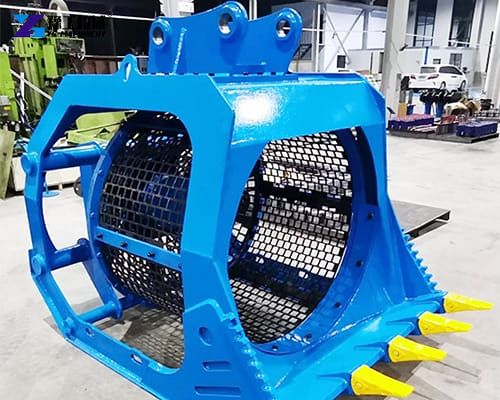
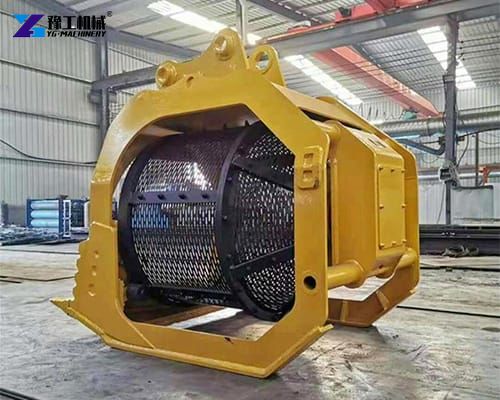
The outer shell is typically constructed from high-tensile, abrasion-resistant steel. Because the bucket undergoes constant friction from rocks and soil, the leading cutting edge is often reinforced with replaceable teeth or a bolt-on blade.
- The Screening Mechanism
Rotary Drum: A cylindrical basket that rotates. Material is tumbled inside, much like a washing machine, allowing fines to drop through the mesh.
- Hydraulic Motor and Drive System
The heart of the hydraulic screening bucket is its hydraulic motor. It must handle high pressure and variable flow rates from the carrier machine. Most modern buckets use a direct drive system or a heavy-duty chain drive protected by a sealed oil bath to ensure longevity and minimal maintenance.
Working Principle
- The working principle of a hydraulic screening bucket is relatively straightforward yet highly efficient. Material is first loaded into the bucket through normal excavation or loading operations. Once the hydraulic system is activated, the screening shafts or drums begin rotating.
- As the material moves within the bucket, smaller particles fall through gaps between the screening elements while larger debris remains inside. The rotation creates continuous agitation, allowing material to be separated quickly and effectively. Oversized material is then discharged separately, either by tilting the bucket or through controlled release.
- Hydraulic control allows operators to adjust rotation speed according to material moisture, density, and composition. This adaptability ensures consistent performance across different working conditions.
Applications Across Industries
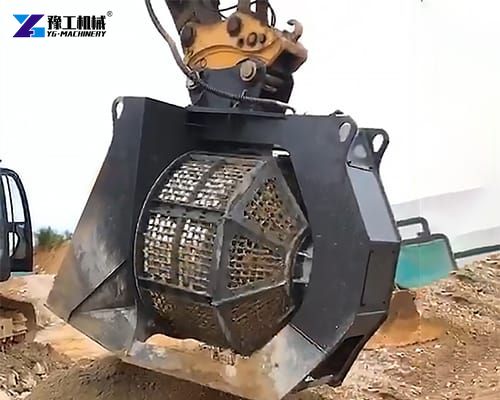
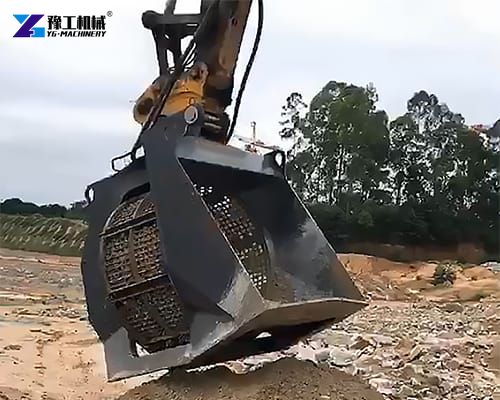
- The hydraulic screening bucket has found applications across numerous industries due to its flexibility and efficiency. In construction projects, it is commonly used for soil preparation, backfill processing, and aggregate separation. Contractors can reuse excavated material instead of purchasing new fill, significantly reducing costs.
- In demolition and recycling operations, the equipment helps separate concrete fragments, bricks, and debris from reusable materials. This supports sustainable construction practices by promoting recycling and reducing landfill waste.
- Landscaping and agriculture sectors benefit from its ability to screen topsoil, compost, and organic material. Fine soil suitable for planting can be produced directly on site, improving workflow efficiency.
- Mining and quarry operations also utilize hydraulic screening buckets for pre-screening tasks. Removing fines before crushing reduces wear on crushers and improves overall processing efficiency.
Advantages of Using An Excavator Screening Bucket
- One of the primary advantages is operational efficiency. Screening and loading occur simultaneously, eliminating the need for additional screening equipment. This reduces machine hours and fuel consumption.
- Cost savings represent another major benefit. By processing materials on site, transportation expenses and disposal fees are significantly reduced. Reusing materials also lowers the need for purchasing new aggregates.
- Environmental benefits are equally important. Reduced material transport leads to lower emissions, while recycling capabilities contribute to sustainable project practices.
- Flexibility enhances productivity. Operators can quickly adapt to changing material requirements by adjusting hydraulic speed or replacing screening elements.
How to Choose a Hydraulic Screening Bucket?
1) Match the bucket to your machine
- Weight and lift capacity: Ensure the bucket’s weight and the load it will add to your machine won’t exceed the machine’s lift capacity or affect stability.
- Hydraulic flow and pressure: Check the required hydraulic flow and operating pressure. Your machine’s hydraulic system must meet or exceed these specs.
- Mounting compatibility: Verify the quick-attach system or mounting plate matches your equipment. Some buckets are universal; others require adapters.
2) Screen size and material flow
- Screen aperture: The size of the openings determines what you keep and what you discard. Larger apertures screen out bigger pieces; smaller apertures separate finer material.
3) Durability and build quality
- Frame construction: Look for reinforced welds, thick walls, and solid mounting points. A bucket exposed to rocky material needs tougher steel and protective coatings.
- Sealing and corrosion resistance: If you work near saltwater or wet conditions, choose corrosion-resistant components and weather-rated seals.
4) Performance in the field
- Throughput and capacity: A bigger unit can move more material per hour, but it also requires more power. Balance your job size with machine capability.
- Power draw: A heavier, more aggressive screen can demand more hydraulic power. Ensure your hydraulic system can sustain the load without starving the pump.
- Noise and vibration: Some models incorporate dampening features. If you’re working in confined spaces or near occupants, consider vibration reduction.
5) Budget and total cost of ownership
- Initial price vs. life cycle cost: A cheaper bucket may cost more in downtime and screen replacements. Consider wear parts, screen costs, and maintenance.
- Warranty and support: Look for a robust warranty and a dealer network for spare parts and service.