
Vibratory pile driver is an attachment mounted on an excavator that uses high-frequency vibration to drive piles into the ground or extract them when necessary. Instead of hammering piles with repeated impacts, it reduces soil resistance by liquefying or loosening surrounding soil through vibration, allowing the pile to sink under its own weight and applied force. This method is widely used in infrastructure projects such as bridges, highways, ports, railways, flood protection systems, and building foundations. Because it attaches directly to an excavator, it offers exceptional flexibility compared to crane-mounted systems.
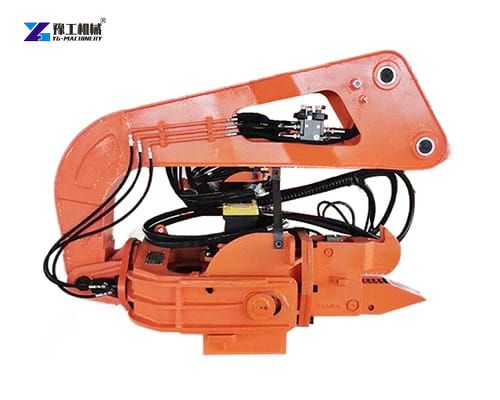
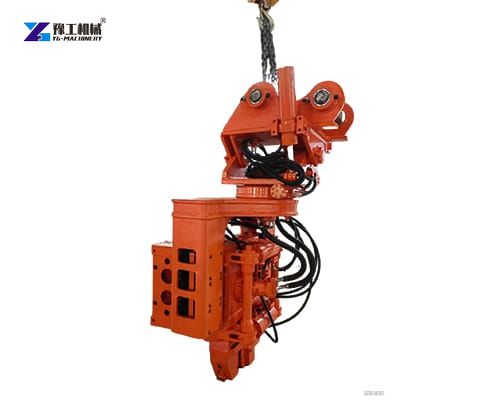
Parameters of the Vibratory Pile Driver
| Model | YG-45 | YG-80 | YG-125 |
| Suitable Excavator | 12–18T | 20–27T | 30–40T |
| Working Flow Rate | 113L | 200L | 260L |
| Maximum Working Pressure | 35Mpa | 35Mpa | 35Mpa |
| Maximum Vibration Force | 343KN | 450KN | 695KN |
| Impact Frequency | 2500rpm | 2500rpm | 2080rpm |
| Maximum Pile Extraction Force | 120KN | 120KN | 168KN |
| Outer Diameter Of Pipe Piles | ≤300mm | ≤300mm | ≤300mm |
| Machine Weight | 1350KG | 2300KG | 2800KG |
| Dimension | 2306*1268*680mm | 2306*1268*680mm | 2610*1616*746mm |
Features of Excavator-Mounted Pile Driver
Several defining features make excavator-mounted vibratory pile drivers stand out in the construction industry.
- High mobility
Since the unit is attached to an excavator, it can move easily across rough terrain and confined job sites without requiring separate transport equipment. - Strong adaptability
Different clamps or jaws allow the machine to handle sheet piles, H beams, pipes, wooden piles, and steel plates. - Low noise compared to impact hammers
Vibration produces less peak noise than traditional diesel hammers, making it suitable for urban environments. - Energy efficiency
The system uses hydraulic power from the excavator, eliminating the need for separate engines or fuel sources. - Precision control
Operators can align piles accurately using the excavator boom and stick, reducing installation errors. - Wide compatibility
Modern units are designed to fit various excavator sizes, from compact machines to large crawler excavators.
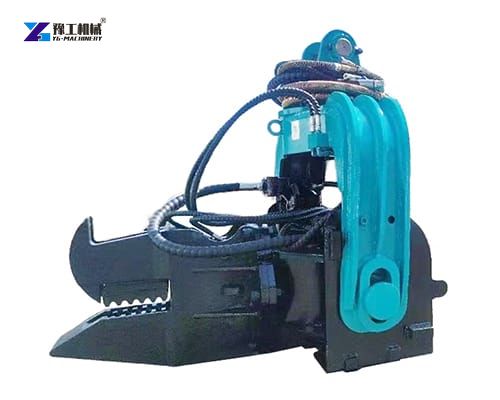
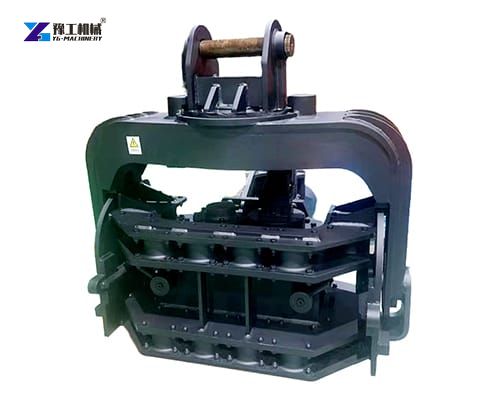
Structural Composition of Vibratory Pile Driver
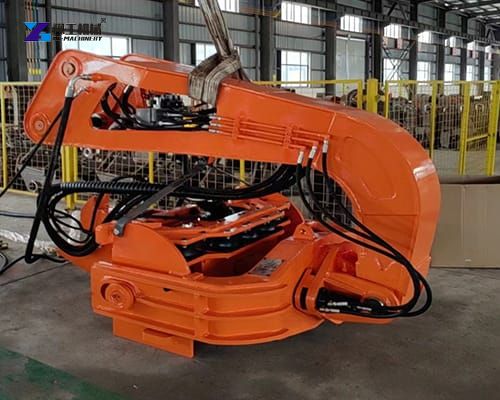
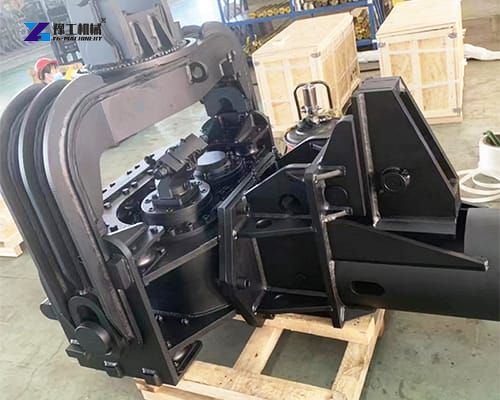
- Clamp or gripper: This component holds the pile firmly during driving or extraction. Hydraulic cylinders provide a strong clamping force.
- Vibration unit: At the heart of the system, this unit contains rotating eccentric weights that generate high-frequency vibration.
- Hydraulic motor: Powered by the excavator’s hydraulic system, the motor drives the eccentric weights.
- Gear system: Transmits rotational energy from the motor to the eccentrics while maintaining synchronization.
- Frame housing: A robust steel structure supports all internal components and absorbs operational stresses.
- Control system: Valves and hydraulic circuits regulate speed, pressure, and clamping force.
Excavated Mounted Pile Driver Working Principle
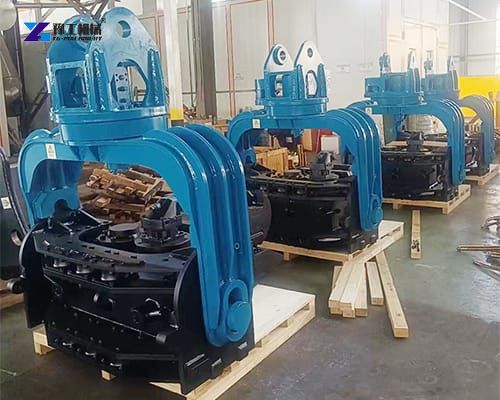
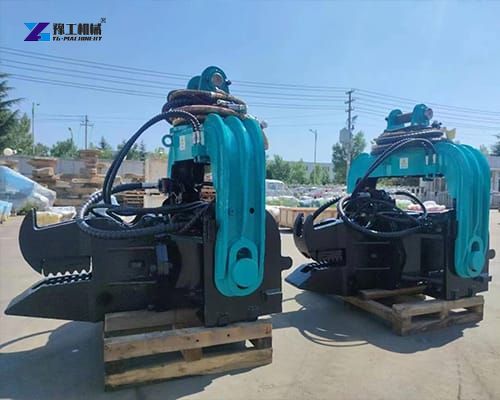
The operating principle is based on the physics of soil behavior under vibration. When the hydraulic motor spins the eccentric weights, centrifugal force creates vertical oscillations. These vibrations are transferred through the clamp to the pile and then to the surrounding soil. As soil particles vibrate, friction between them decreases and pore water pressure may increase in saturated soils. This temporary reduction in resistance allows the pile to sink under gravity and additional downward force from the excavator. For extraction, the same vibration loosens soil grip on the pile, allowing it to be pulled out smoothly.
High Frequency Pile Driver Applications
The vibratory pile driver for excavator is used across multiple sectors of construction and engineering.
- Foundation construction: Steel sheet piles and pipe piles are commonly installed to support building foundations, basements, and underground structures.
- Retaining walls: Temporary or permanent retaining walls for excavation projects rely heavily on sheet pile installation.
- Bridge engineering: Pile driving is essential for bridge piers, abutments, and support structures.
- Marine and port construction: Dock walls, quay structures, breakwaters, and offshore platforms often require piles installed below water level.
- Flood control and environmental projects: Levees, cofferdams, and shoreline reinforcement systems depend on rapid pile installation.
- Temporary structures: Construction sites frequently use removable sheet piles for trench support and safety barriers.
Selection Guide: How to Choose the Right Model?
- Choosing the correct vibratory pile driver for the excavator is crucial for project success.
- Match with the excavator size: Ensure the attachment weight and hydraulic requirements are compatible with the carrier machine.
- Consider pile types: Select clamps designed for the specific pile profiles you plan to use.
- Evaluate vibration force: Higher centrifugal force enables deeper penetration and handling of tougher soils.
- Assess build quality: Durable materials and robust welding ensure long service life.