
In modern construction, concrete piles form the hidden backbone of many structures. They are driven deep into the ground to provide stability for bridges, high-rise buildings, ports, and industrial facilities. Sometimes, it is also about renovation, redesign, and removal. When foundations need to be modified or replaced, concrete piles must be cut or broken efficiently and safely. The hydraulic pile breakers offer a powerful and refined solution. Hydraulic pile breaker is a specialized piece of equipment designed to reduce the end of a concrete pile to a specified height by applying controlled crushing force. The machine clamps onto the top of the pile and, with hydraulic power, breaks the pile into manageable pieces.
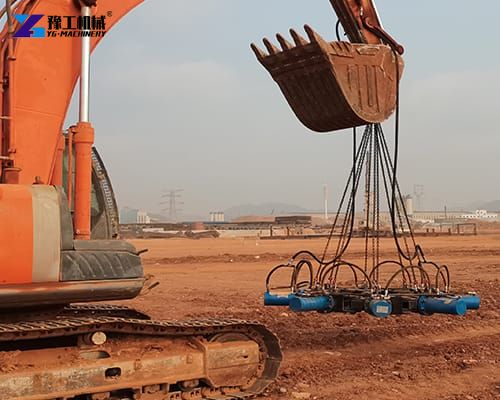
How to Break Concrete Piles with Hydraulic Pile Breakers? – A High-Level Overview
1.Assess the site and the piles
Identify pile type, like steel-reinforced concrete, diameter, length, and cover.
Check for utilities, nearby structures, and any rebound or vibration concerns.
Confirm pile height target and the allowable residual height for safe removal or trimming.
2. Prepare the equipment and crew
Ensure the hydraulic pile breaker is in good working order, with fresh hydraulic fluid, hoses, and fittings compatible with the machine’s specifications.
Use proper PPE: hard hat, safety glasses, gloves, hearing protection, and steel-toed boots.
Establish a safety zone around the work area and communicate with nearby trades about the operation.
3. Position and clamp the breaker
Bring the breaking part or clamping assembly onto the top of the pile, aligning it with the pile axis.
Secure the clamp snugly so the tool can apply uniform force without slipping.
Verify that the pile is stable and will not tip or shift during breaking.
4. Apply controlled hydraulic force
Engage the hydraulic system to deliver a series of steady, controlled blows or a continuous compression, depending on the model.
The goal is to fracture the exposed concrete to the specified height in a controlled manner, reducing the risk of fly-rock or spalling.
Operators typically repeat the process until the desired break height is reached.
5. Inspect and manage broken pieces
After breaking, remove debris and assess the pile fragment size. Some jobs require cutting or further breaking to meet handling or disposal requirements.
Use wheelbarrows, buckets, or a small crane/ forklift to move pieces to a designated staging area for recycling or disposal.
6. Clean up and site restoration
Clear dust and debris, especially near drainage or sensitive equipment.
Inspect surrounding structures for any unintended vibrations or damage, and address promptly if noticed.
Note: This is an overview for planning and understanding the process. Please follow the machine instructions and engage trained professionals for actual operation. For detailed operating procedures, please consult the manufacturer you purchased the product. If you are interested in purchasing equipment from us, please feel free to contact us.
The Science Behind Controlled Breaking
The success of hydraulic pile breakers lies in their understanding of material behavior. Concrete is strong under compression but brittle under tension. By applying evenly distributed radial force, the breaker induces internal tensile stress that exceeds the concrete’s capacity. Hydraulic breakers deliver steady, controlled force. This reduces microcracking in the surrounding concrete and soil. It also minimizes the risk of shock waves traveling through nearby structures, a critical consideration in urban environments.
Adapting to Different Pile Shapes and Sizes
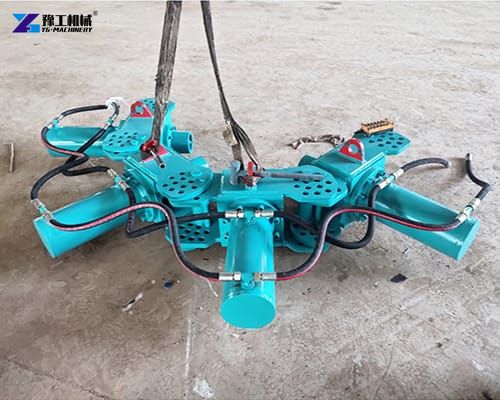
Concrete piles come in various shapes, including round and square. Hydraulic pile breakers are designed with this diversity in mind. Modular systems can be reconfigured by adding or removing modules to match the pile geometry. For large diameter piles, multiple hydraulic cylinders work together to deliver sufficient force. For smaller piles, fewer modules are used, making the system lighter and easier to handle. This adaptability makes hydraulic pile breakers a versatile tool for contractors working on diverse projects. YG Attachments Machinery provides a variety of hydraulic pile breakers with different specifications. If you are interested in this machine, please contact us for more details and a free quotation.
| Model | YG-800 | YG-980 | YG-1150 | YG-1300 | YG-1500 | YG-1650 | YG-1800 | YG-2000 | YG-2150 | YG-2300 | YG-2500 |
| Applicable pile diameter | 600-800mm | 800-900mm | 1100-1150mm | 1150-1300mm | 1300-1500mm | 1500-1650mm | 1650-1800mm | 1800-2000mm | 2000-2150mm | 2150-2300mm | 2300-2500mm |
| Number of modules | 8 | 9 | 10 | 11 | 12 | 13 | 14 | 15 | 16 | 17 | 18 |
| Machine weight | 2400kg | 2700kg | 3000kg | 3300kg | 3600kg | 3900kg | 4200kg | 4500kg | 4800kg | 5100kg | 5400kg |
| Applicable excavator model | 20-30T | 20-30T | 20-30T | 30-40T | 30-40T | 30-40T | Hydraulic pump station | Hydraulic pump station | Hydraulic pump station | Hydraulic pump station | Hydraulic pump station |
| Cylinder stroke | 250mm | 250mm | 250mm | 250mm | 250mm | 250mm | 250mm | 250mm | 250mm | 250mm | 250mm |
| Working pressure | 35Mpa | 35Mpa | 35Mpa | 35Mpa | 35Mpa | 35Mpa | 35Mpa | 35Mpa | 35Mpa | 35Mpa | 35Mpa |
| Oil storage capacity of a single module | 5L | 5L | 5L | 5L | 5L | 5L | 5L | 5L | 5L | 5L | 5L |
| Breaking force | 70T | 70T | 70T | 70T | 70T | 70T | 70T | 70T | 70T | 70T | 70T |