
Looking at these tips for choosing the right magnet attachment for your excavator can save time, cut costs, and boost productivity. Here’s a concise, practical guide to help you make the best decision.
1. Understand your material and work environment
Type of material: dry earth, crushed rock, rebar, scrap metal, or mixed debris all behave differently with magnets.
Metal weight and size: ensure the magnet can handle the heaviest pieces you’ll encounter.
Magnetic field strength vs. safety: stronger isn’t always better, oversized magnets can cause hazards or interference in tight spaces.
Environment: dust, moisture, and high temperatures can affect performance and longevity.
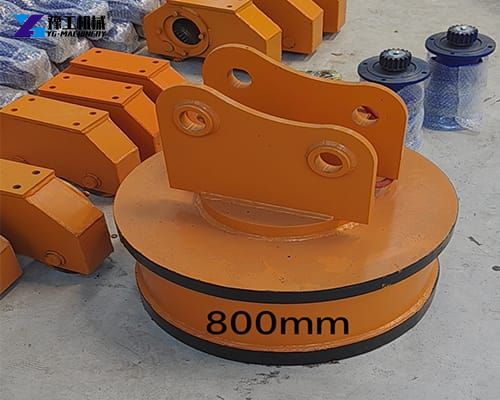
2. Match the magnet to your excavator
Lifting capacity: verify the magnet’s weight and the machine’s breakout force. Overloading can strain hydraulics and wear components.
Hydraulic flow and pressure: Many magnets are hydraulically powered; ensure your excavator’s flow rate and pressure meet the magnet’s requirements.
Attachment compatibility: Check mounting style (via quick coupler, pin-on, or dedicated adapter) and ensure it fits your model.
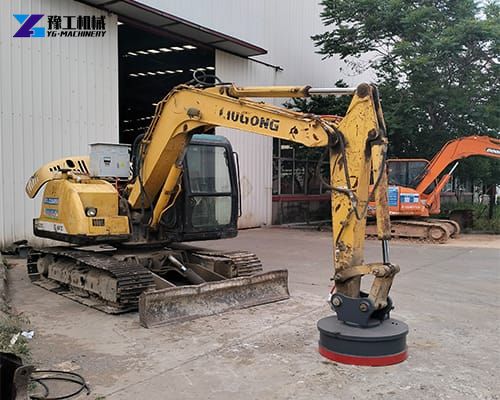
3. Consider magnet type and features
Electromagnetic magnets: strong, controllable, and ideal for ferrous metals in clean environments. Require power and can generate heat.
Permanent magnets: no power draw, lower maintenance, good for continuous lifting of light to medium loads but can be weaker for heavier tasks.
Dust and moisture protection: look for seals and enclosure ratings that suit dusty or wet sites.
4. Evaluate lifting and handling capabilities
Lifting force vs. load: aim for a magnet with a lifting capacity well above the heaviest piece you plan to handle.
Gripping reliability: consider forked grippers or vacuum-like behavior for irregular shapes; some magnets include flaps or eddy-current features to grab specific items.
Drop protection: read about height limits and safe operating procedures to avoid unintended releases.
5. Maintenance, durability, and service life
Build quality: rugged housings, reinforced frames, and corrosion resistance extend life on gritty job sites.
Replaceable components: consider magnets with easily replaceable coils, seals, or surfaces that wear fast (e.g., contact faces).
6. Safety and compliance
Training and procedures: Ensure operators are trained in magnet use, grounding, and load handling.
Safe operation distance: Establish distances for bystanders and sensitive equipment.
7. Budget and total cost of ownership
Upfront cost vs. lifecycle cost: cheaper magnet attachments may cost more in maintenance or replacement.
Energy consumption: electromagnets draw power; factor in fuel and generator costs if applicable.
Downtime reduction: a reliable magnet can reduce time spent sorting or processing materials, delivering long-term savings.
Contact Us to Choose the Suitable Excavator Magnet Attachment
YG Machinery provides various models of the excavator magnet attachments. There are lots of specifications available. If you are looking for a magnet attachment for your excavator. Welcome to contact us to get more details. 【Email: admin@ygattachments.com
WhatsApp/WeChat: +86 18337123872】
| Model | YGML02 | YGML04 | YGML06 | YGML08 | YGML10 | YGML14 | YGML20 |
| Suitable excavator | 4-6T | 7-11T | 12-16T | 17-23T | 24-30T | 31-40T | 41-50T |
| Weight | 1400kg | 1500kg | 1890kg | 2000kg | 2200kg | 2500kg | 2800kg |
| Power | 5kw | 8kw | 8kw | 10kw | 10kw | 15kw | 15kw |
| Outer diameter | 700mm | 800mm | 900mm | 1100mm | 1200mm | 1300mm | 1400mm |
| Working flow | 30-55 lpm | 50-100 lpm | 90-110 lpm | 100-140 lpm | 130-170 lpm | 200-250 lpm | 250-320 lpm |
| Working pressure | 170 bar | 180 bar | 190 bar | 200 bar | 210 bar | 250 bar | 250 bar |