
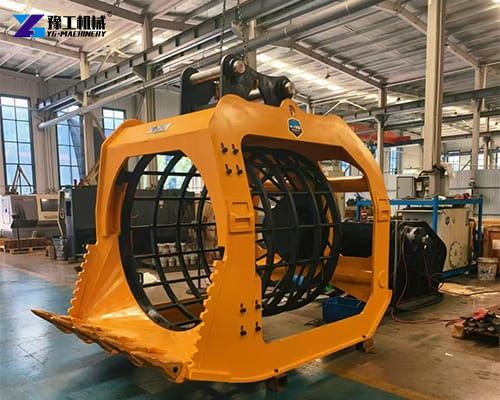
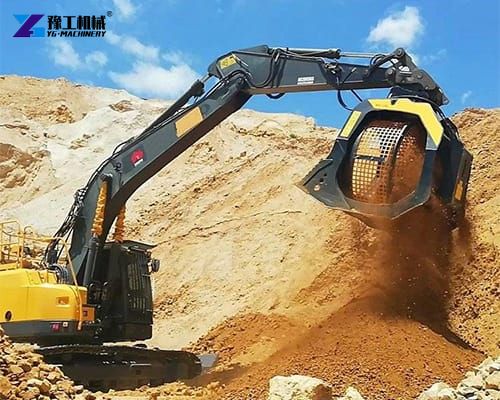
Rotating screening bucket is a hydraulic attachment designed for use with excavators. It integrates a chamber filled with rotating shafts, discs, or mesh elements that separate materials based on size and density. Instead of transporting raw materials to stationary screening stations, operators can process them directly where they are found. This approach increases productivity and allows immediate reuse of screened material for filling, backfilling, landscaping, or recycling. It has become one of the most influential attachments in construction, mining, landscaping, waste recycling, and aggregate processing. Its ability to separate, sort, aerate, mix, and refine materials directly on site has transformed workflows, allowing operators to work faster and with greater accuracy while reducing fuel consumption, transportation costs, and environmental impact.
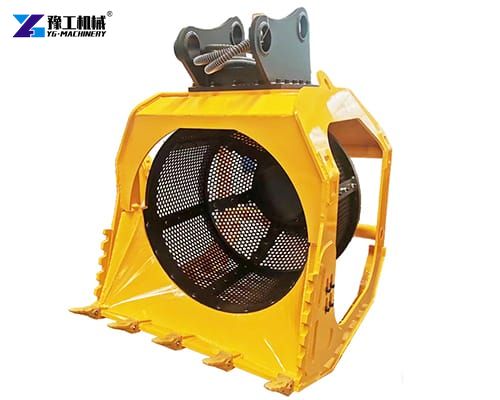
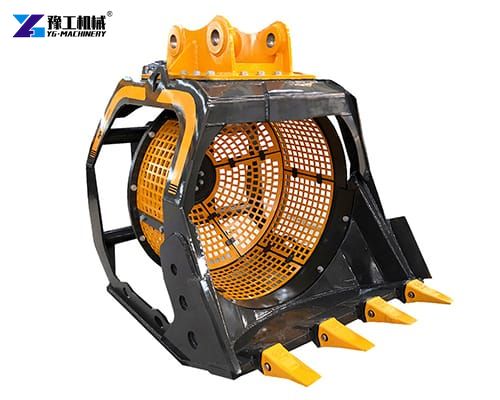
Parameters of the Rotary Screening Bucket
| Model | YGS-9 | YGS-15 | YGS-25 | YGS-35 |
| Suitable Excavator | 5–9T | 10–15T | 16–25T | 26–40T |
| Weight | 500KG | 800KG | 1600KG | 2800KG |
| Bucket Capacity | 0.3m³ | 0.4m³ | 1.1m³ | 2m³ |
| Working Pressure | 20Mpa | 20Mpa | 20Mpa | 20Mpa |
| Recommended Flow Rate | 60L/min | 80L/min | 140L/min | 200L/min |
| Screen Size | 5–50 | 5–80 | 5–100 | 5–120 |
Features of A Rotating Screening Bucket
- High-efficiency screening system
The rotating shafts or drums ensure consistent movement of material inside the chamber. This movement prevents clogging and improves throughput, even when processing wet or clay-rich soil. - Adjustable output size
Many designs offer interchangeable screens or adjustable spacing that allow operators to control output particle size. This is particularly useful in landscaping and aggregate production where precision grading is required. - Durable construction
Industrial grade steel, reinforced side plates and wear resistant components ensure long service life in demanding environments. Hard faced edges and heavy duty bearings help withstand constant abrasion from rocks, gravel and demolition debris. - Low noise and reduced vibration
The rotation based mechanism generally produces less noise and vibration compared to traditional vibrating screening attachments. This contributes to safer and more comfortable operation.
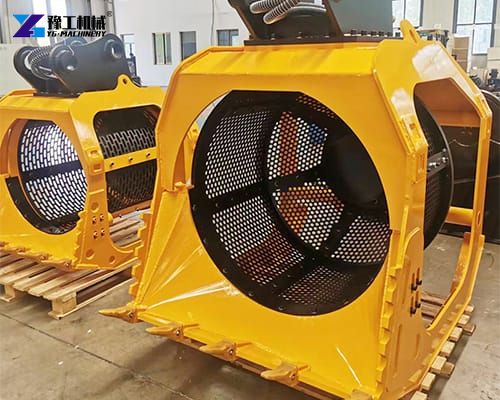
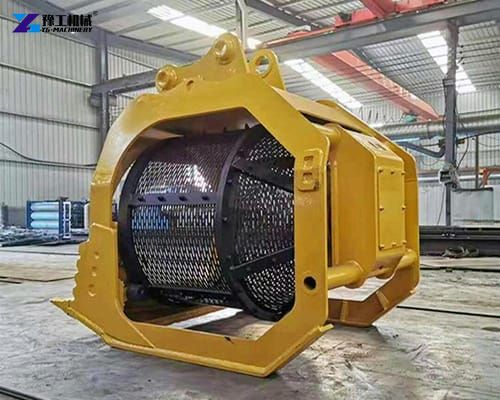
Applications of the Excavator Screening Bucket
- Landscaping and soil preparation
The bucket can screen soil to remove stones, sticks and clumps, creating fine topsoil ready for planting, lawn installation or garden beds. It also aerates soil by breaking up compacted masses. - Construction and demolition
On construction sites, it separates reusable aggregates from demolition waste. Clean material can be reused as drainage layers, base course or backfill. - Mining and quarrying
Operators use rotating screening buckets to refine extracted materials before transportation. Removing fines or separating ore from overburden enhances operational efficiency.
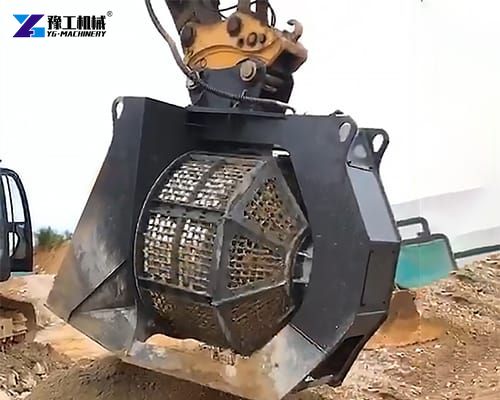
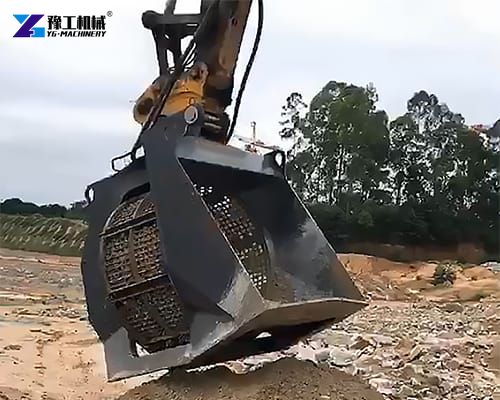
Advantages of Rotary Screening Bucket for Excavator
- Reduced operational costs
Screening on site eliminates material hauling to external screening facilities, significantly lowering fuel consumption and transportation fees. - Higher productivity
Operators can process large quantities of material continuously. The rotating system prevents clogging, providing consistent output even with moist or sticky material. - Resource reuse and environmental benefits
By enabling immediate reuse of screened material, the bucket supports circular construction practices. The rotating screening bucket reduces the need for new materials and minimizes waste sent to landfills. - Improved accuracy
Adjustable screens or shaft spacing allow precise control over particle size, improving the quality of the final product.
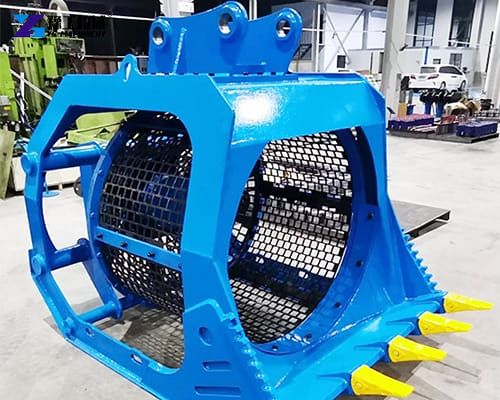
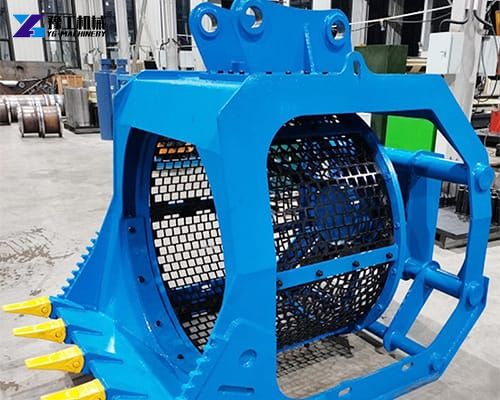
Selection Guide For Choosing The Right Rotating Screening Bucket
Choosing the proper model depends on several key factors.
- Carrier machine compatibility
Ensure the bucket matches the hydraulic flow, pressure, and weight capacity of the excavator or loader. - Material type
Different materials require different screen sizes. For fine topsoil, choose smaller openings. For demolition waste, a larger spacing is preferred. - Desired output size
Interchangeable screen systems offer flexibility. Select a product that allows easy replacement of screening elements. - Build quality
Look for reinforced frames, wear-resistant components and sealed bearings that withstand harsh conditions.
Seven Maintenance Tips for Excavator Screening Bucket
Proper maintenance ensures long lifespan and optimal performance.
- Regular lubrication
Bearings, pivot points, and hydraulic connections must be lubricated following the manufacturer’s schedule. - Inspection for wear
Rotation shafts, discs, screens and frame edges should be checked for abrasion. Early identification prevents costly damage. - Cleaning after use
Although self-cleaning, the bucket still benefits from routine washing. This prevents the buildup of sticky materials. - Hydraulic system checks
Inspect hoses, fittings, and motors for leaks or pressure drops. Smooth hydraulic function is essential for rotation. - Tightening bolts
Vibration and motion may loosen bolts over time. Regular tightening ensures structural integrity. - Replacing worn screens
Screens inevitably wear down. Replace them as needed to maintain accurate particle sizing. - Storage considerations
When not in use, store the bucket in a dry environment. Covered storage prevents rust and protects hydraulic components.