
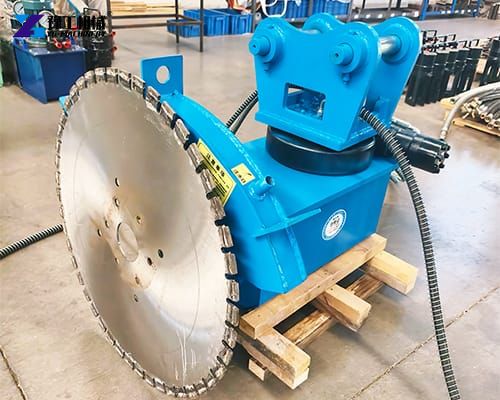
Excavator rock saw attachment is a hydraulic-powered cutting unit mounted on the boom or arm of an excavator. It uses a high-strength circular blade fitted with industrial-grade teeth or segments to slice through rock, concrete, asphalt, and other tough materials. The attachment is commonly used where precise trenches, clean cuts, or controlled material removal are required. Compared to traditional excavation methods such as hammering, blasting, or ripping, a rock saw provides a cleaner, quieter, and more controlled way to remove hard materials.
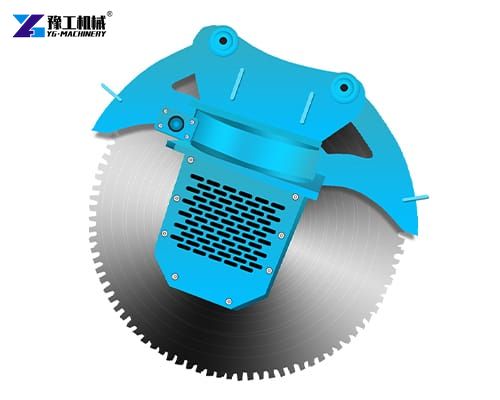
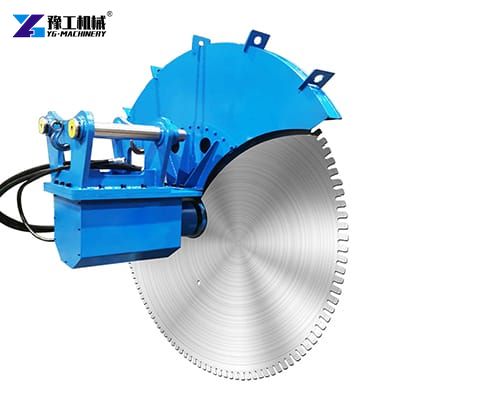
Parameters of the Excavator Rock Saws
| Model | YG-J1 | YG-J2 | YG-J3 | YG-Q1 | YG-Q2 |
| Suitable excavator type | 2-4T | 6-9T | 10-18T | 20-28T | 30-45T |
| Circular saw diameter | 0.4-0.8m | 1.2-1.6m | 1.8-2.2m | 2.2-2.6mm | 2.6-3.2mm |
| Cutting slit width | 5mm | 9mm | 14mm | 30mm | 30mm |
| Max. Cutting depth | ≤250mm | ≤600mm | ≤900mm | ≤1100mm | ≤1400mm |
| Rated pressure | 30Mpa | 30Mpa | 30Mpa | 35Mpa | 35Mpa |
| Recommended flow | 30L/min | 80L/min | 120L/min | 220L/min | 300L/min |
Features of Excavator Rock Saw Attachments
- Reinforced Circular Blades
High-strength steel or diamond-tipped blades ensure durability even under extreme load. - Adjustable Cutting Depth
Operators can precisely set the depth to suit trenching profiling or selective cutting jobs. - Hydraulic Motor Integration
Efficient hydraulic systems power the saw for consistent torque and blade speed. - Reduced Vibration
Engineered damping systems minimize vibration, which improves operator comfort and extends machine lifespan. - Universal Excavator Compatibility
Adapters and couplers enable use across multiple excavator models.
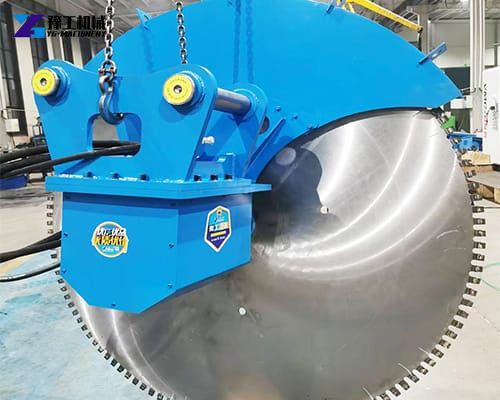
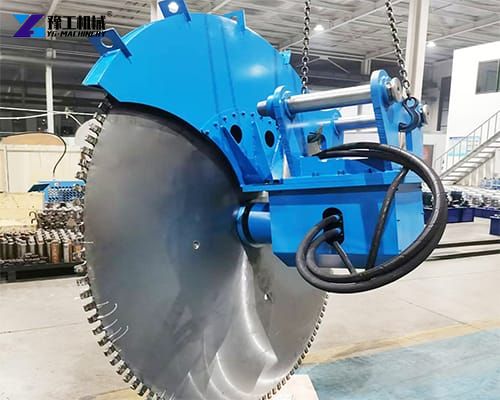
Structural Components of Excavator Rock Saw
- The Mounting Bracket Or Coupler
This is the interface that connects the excavator rock saw attachment to the excavator’s boom or dipper arm. It must be robust and precisely engineered for compatibility with the excavator’s quick coupler or pin-on system. - Hydraulic Motor and Drive System
This is the heart of the attachment. It converts the hydraulic pressure and flow supplied by the excavator into the high-torque, rotational motion necessary for cutting. A planetary gearbox is often integrated to multiply the torque output. - Frame and Housing
A heavy-duty steel structure that protects the internal components and provides the necessary rigidity and strength to withstand the significant forces generated during cutting. - Saw Blade
The most critical component. It is a large, circular metal disc with cutting segments mechanically bonded to its outer rim. Carbide teeth blades often fitted with Tungsten Carbide tips; these are suitable for softer to medium-hard rock, concrete, and asphalt, offering excellent cost-effectiveness and durability.
Applications Where the Rock Saw Attachment Shines
The unique capabilities of the excavator rock saw attachment have expanded its use across numerous heavy-duty sectors.
- Trenching And Utility Installation
Rock saws are essential for cutting precise, vertical trenches in rocky ground or paved surfaces for the installation of pipelines, fiber optic cables, and utility lines. - Road and Pavement Cutting
For highway maintenance and urban road repair, the saw is used to accurately cut sections of asphalt or concrete pavement before removal. - Tunneling and Underground Construction
In tunnel excavation, especially in hard rock formations or sensitive areas, rock saws provide a controlled method for cutting the tunnel face and creating pilot bores. - Quarrying and Stone Shaping
Quarries utilize the saw for extracting valuable dimension stone—such as granite or marble—in precise, large blocks. The clean-cut finish minimizes waste and reduces the need for secondary processing. - Landscaping and Earthworks
For creating rock walls, terracing, or shaping natural rock formations in high-end landscaping projects, the saw delivers the necessary artistry and precision.

Selection and Procurement: Choosing the Proper Rock Saw for Excavator
- Excavator Compatibility
This is the foremost consideration. The excavator rock saw attachment must be sized correctly for the host excavator’s operating weight. Crucially, the excavator’s hydraulic flow and pressure output must match the saw’s requirements. - Material Type and Blade Selection
Hard Rock and Reinforced Concrete Demand a high-quality diamond blade. Asphalt and softer rock can be efficiently handled by a tungsten carbide tooth blade. - Cutting Depth And Width
The diameter of the saw blade determines the maximum cutting depth. Project specifications for trench depth or concrete slab thickness must dictate the required blade size. The width of the blade, or kerf, affects the cutting line width.