
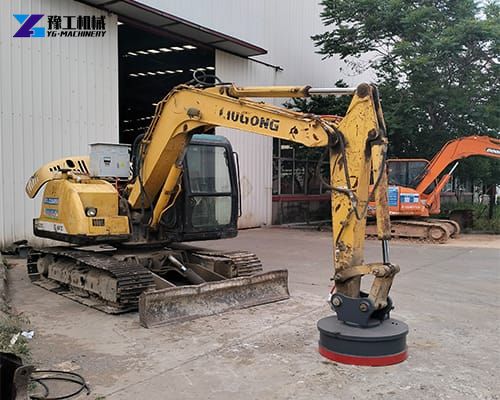
Scrap metal magnet for excavator is a magnetic lifting attachment installed at the end of an excavator boom. It uses either electromagnetic or hydraulic force to attract and hold ferrous metals such as steel, iron, and certain alloys. Once attached, the excavator can quickly pick up scattered scrap, move heavy metal components, and load materials into trucks or processing equipment. Compared to mechanical grapples or manual sorting, magnetic lifting relies on invisible yet extremely powerful magnetic fields. This allows operators to handle irregular shapes, small fragments, and bulky steel objects with remarkable speed and precision.
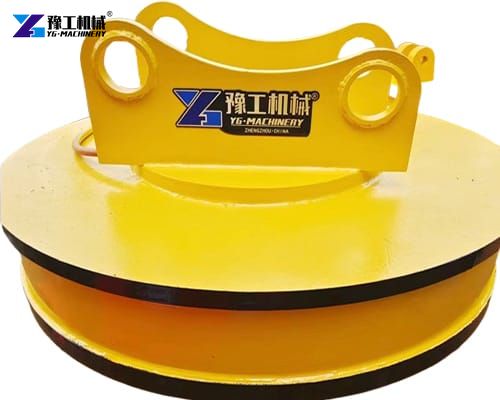
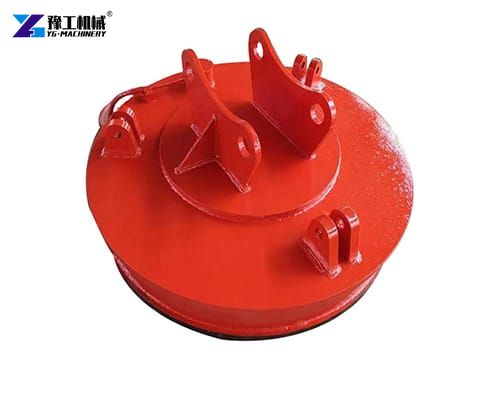
Parameters of the Excavator Magnet Attachments
| Model | YGML02 | YGML04 | YGML06 | YGML08 | YGML10 | YGML14 | YGML20 |
| Suitable excavator | 4-6T | 7-11T | 12-16T | 17-23T | 24-30T | 31-40T | 41-50T |
| Weight | 1400kg | 1500kg | 1890kg | 2000kg | 2200kg | 2500kg | 2800kg |
| Power | 5kw | 8kw | 8kw | 10kw | 10kw | 15kw | 15kw |
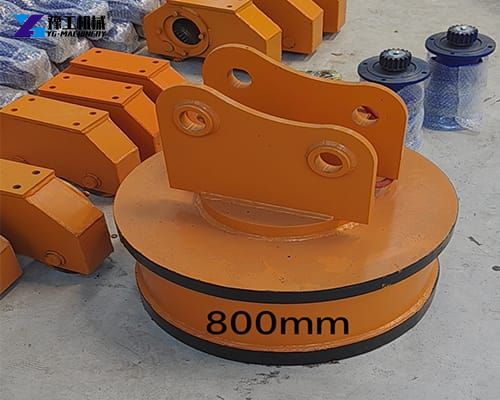
| Outer diameter | 700mm | 800mm | 900mm | 1100mm | 1200mm | 1300mm | 1400mm |
| Working flow | 30-55 lpm | 50-100 lpm | 90-110 lpm | 100-140 lpm | 130-170 lpm | 200-250 lpm | 250-320 lpm |
| Working pressure | 170 bar | 180 bar | 190 bar | 200 bar | 210 bar | 250 bar | 250 bar |
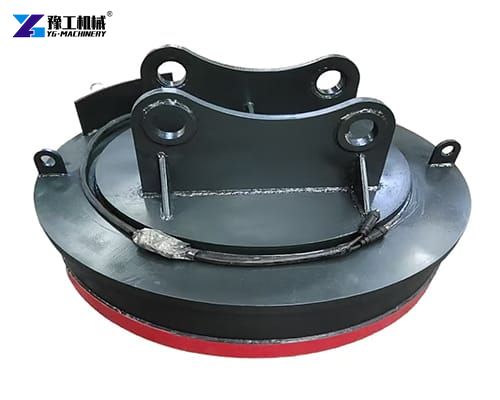
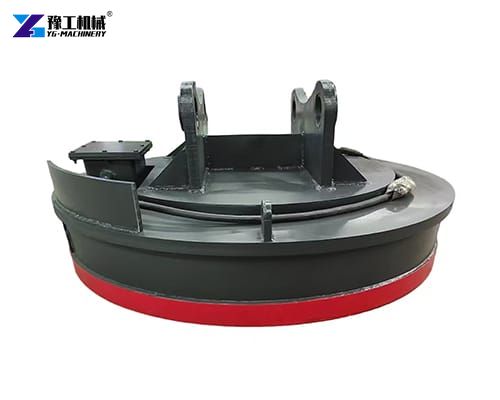
Advantages of Using Excavator Magnet Attachments
- Enhanced Safety: Manual handling of sharp, rusty scrap metal is a leading cause of workplace injuries. A scrap metal magnet for excavator keeps ground workers away from the danger zone, allowing the machine to do the heavy lifting from a safe distance.
- Increased Payload Speed: A magnet can “grab” and “release” instantly. This split-second difference adds up to hundreds of extra tons moved over the course of a work week.
- Material Purity Magnets are the ultimate filter. If you are selling crushed concrete, having it free of metal pins and wires increases its market value. The magnet ensures that every piece of ferrous metal is extracted from the waste stream.
- Reduced Tire Wear On worksites, flat tires on trucks and loaders are expensive. Using a magnet to perform a “final sweep” of the ground removes small nails and shards that cause punctures, saving maintenance costs.
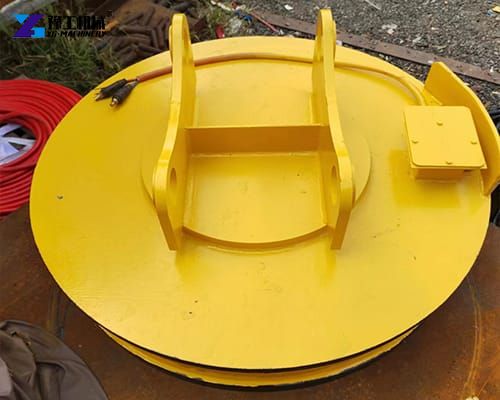
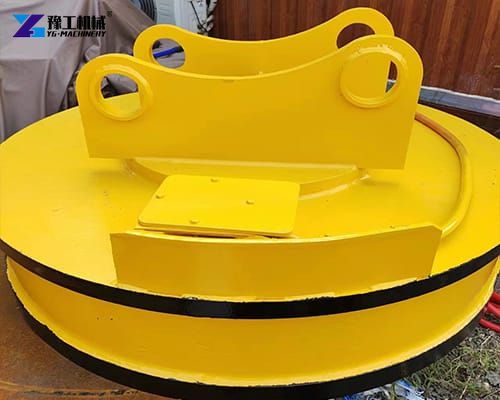
Excavator Scrap Metal Magnet Performance Analysis
- Performance of a scrap metal magnet for excavator depends on several factors. Magnetic strength is influenced by magnet size, material quality, and power supply in electromagnetic models. Larger diameters generally provide greater lifting capacity.
- Surface contact also plays a role. Flat and clean metal surfaces are lifted more easily than irregular or rusty pieces. Environmental conditions such as temperature and moisture can affect performance, especially for lower quality magnets.
- Energy efficiency is another consideration. Modern electromagnetic magnets are designed to minimize power consumption while maintaining strong lifting force, contributing to lower operating costs.
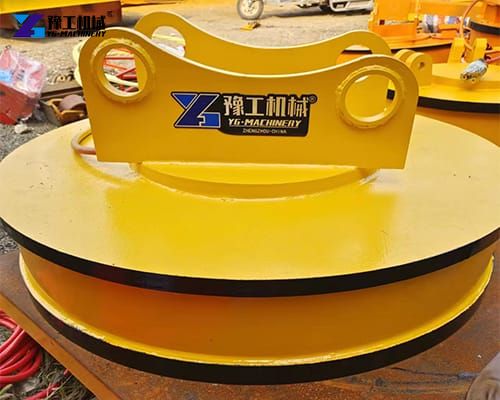
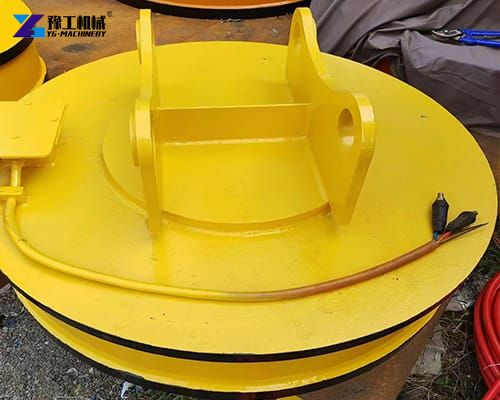
Structure and Composition: What Is Inside?
To appreciate how a scrap metal magnet for excavator works, one must look at its robust physical build.
- The Shell or Case. The outer body is usually cast from high-permeability steel or manganese steel. This housing must be extremely tough to withstand constant impacts against concrete and steel beams.
- The Magnetic Coil. This is the heart of the unit. Coils are typically made of high-conductivity aluminum or copper wire. While copper is more efficient, aluminium is often preferred for excavator attachments because it is lighter, allowing for a larger magnet size without exceeding the excavator’s lifting capacity.
- The Bottom Plate. Also known as the “manganese plate,” this is the part that touches the scrap. Manganese steel is used because it is non-magnetic (allowing the magnetic field to pass through it) and becomes harder as it is impacted, providing incredible durability.
Buying Guide: How to Choose a Suitable Excavator Magnet?
Selecting the perfect scrap metal magnet for excavator requires a calculation of several factors to ensure compatibility and ROI.
- Excavator Weight Class A magnet that is too heavy will tip the machine, while one that is too small will underutilize the machine’s power.
- Material Type: Are you lifting heavy, melting scrap, or light “tin” and turnings? Heavy scrap requires a magnet with a deep field, whereas light, flat scrap requires a larger surface area.
- Voltage and Power Supply: Ensure your excavator’s electrical system can support the control system, or that your hydraulic flow is sufficient to drive a hydraulic magnet.
- Chain vs. Fixed: Link Chain-hung magnets offer flexibility to pick up scrap from uneven piles. Fixed-link magnets allow the operator to use the magnet to push or “rake” material, but they transmit more vibration to the excavator boom.