
Crusher bucket for excavator is an attachment designed to crush and reduce the size of various materials such as concrete, rocks, demolition debris, bricks, and asphalt. It uses the power of the excavator’s hydraulic system to drive a set of crushing jaws, allowing the operator to break down materials without the need for extra equipment. Excavator crusher bucket has become one of the most versatile attachments in modern construction, mining, demolition, roadwork, and material recycling industries.
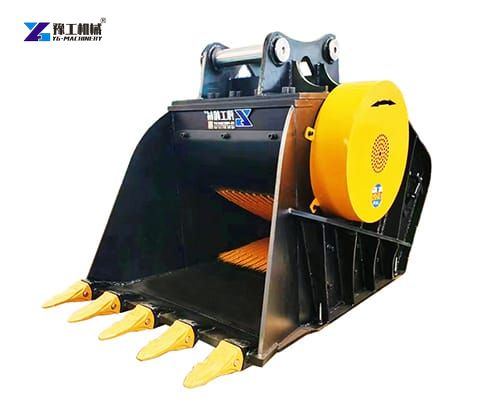
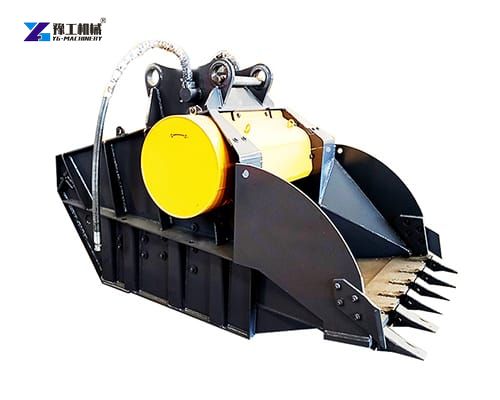
Features of High Quality Crusher Bucket for Excavator
A great crusher bucket stands out through innovation, strength, and long-term performance. The following features highlight the essential characteristics of a reliable crusher bucket:
- Reinforced structure
A well-built crusher bucket is usually made from high-strength alloy steel. Reinforcements in crucial load-bearing areas maximize durability and resistance to wear. - Efficient crushing mechanism
Many crusher buckets utilize a jaw-type crushing system with a fixed jaw and a moving jaw driven by hydraulics. - Adjustable output size
High-quality crusher buckets allow operators to adjust material output size. This flexibility helps meet different project requirements, such as producing backfill materials, foundation base layers, or finer aggregates for reuse. - Lower vibration and noise
Noise reduction technology is vital in urban operations. Premium crusher buckets integrate vibration dampening systems, cushioned jaw designs, and smooth hydraulic modulation to enhance safety and comfort.
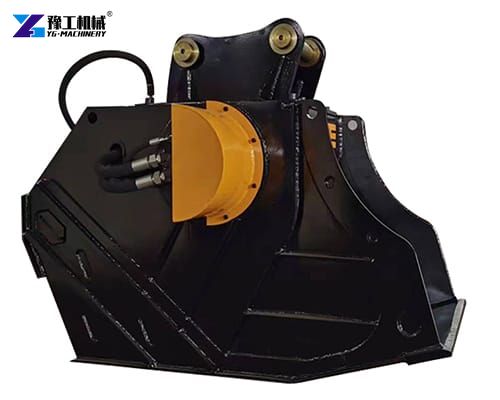
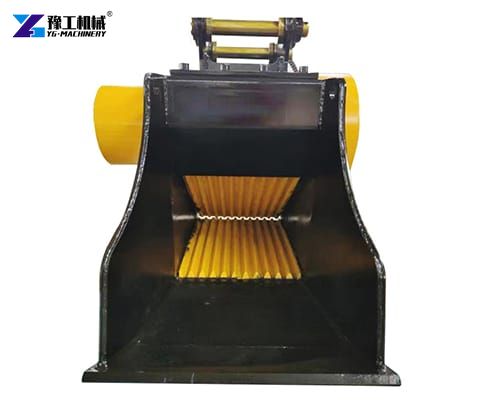
Applications of the Excavator Crusher Bucket
The versatility of a crusher bucket makes it essential across numerous industries. Key applications include:
- Demolition
Crusher buckets for excavators are used to crush concrete, bricks, and structural materials directly on site, simplifying disposal and enabling immediate material recycling. - Mining and quarrying
Operators can crush rocks and minerals at the extraction point, reducing transport needs and optimizing workflow. - Road construction
Crushing asphalt, old pavement, and road debris on-site reduces the need for hauling materials to recycling facilities. - Landscaping
Contractors can produce gravel, drainage layers, or decorative stone materials using a crusher bucket. - Pipeline and trenching projects
Excavated rock can be processed directly and reused as bedding or backfilling material. - Agriculture and forestry
Crusher buckets can break down stones and rock fragments found in fields, making land preparation more efficient.
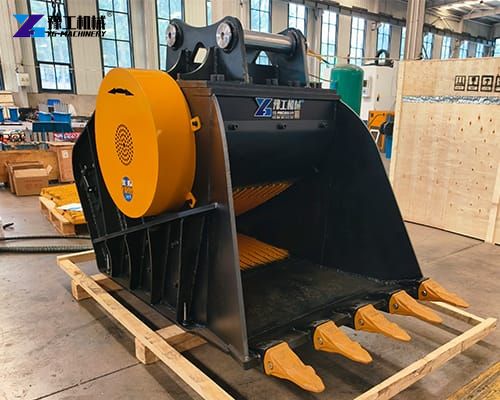
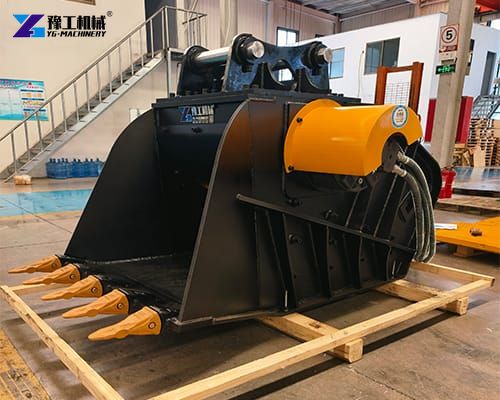
How Does the Excavator Crusher Bucket Attachment Work?
The operation of the crusher bucket for excavator is elegantly simple yet powerfully effective. The excavator operator uses the bucket to collect the material to be processed, such as demolished concrete or natural rock. Once loaded, the material is held within the bucket’s chamber. The operator then activates the crushing function via the excavator’s hydraulic controls. This engages the hydraulic motor, which drives the movable jaw. The jaw moves in a cyclical motion, compressing the material against the fixed jaw. The enormous force, generated by the excavator’s hydraulic power, fractures the material. Smaller pieces fall through the pre set gap at the bottom (controlled by the output grid), while larger pieces remain to be crushed further in subsequent cycles. The entire process happens in a contained environment, minimizing dust and spillage. The crushed material can then be precisely discharged on site for immediate use as a base layer, backfill, or drainage material.
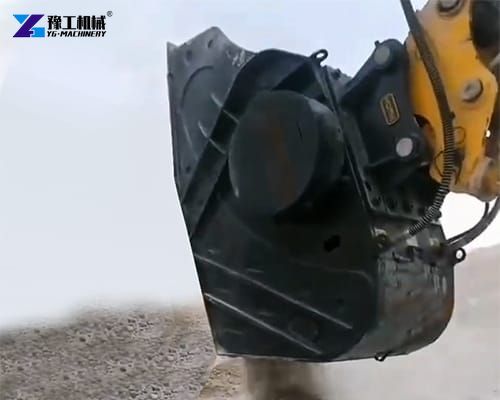
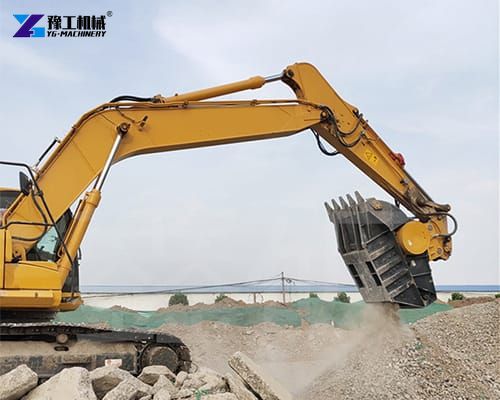
In-Depth Analysis: Making A Choice
- The primary consideration is compatibility with your excavator. The operating weight of the crusher bucket must be within the recommended weight range for your machine to maintain stability and performance. Auxiliary hydraulic flow and pressure, the crusher bucket has specific hydraulic requirements.
- Next, analyze the material you will predominantly crush. The hardness, abrasiveness, and size of the input material determine the required strength of the jaws, the necessary crushing force, and the ideal bucket model.
- Required output production rate and final grain size are also critical. Different models have different output capacities measured in cubic yards per hour.