
Excavator milling head, also commonly known as a drum cutter or rotary cutting head, is a high-power hydraulic attachment designed to replace the standard bucket on an excavator’s arm. It consists of one or two rotating drums embedded with numerous tungsten carbide-tipped cutting tools, or picks. When connected to the excavator’s hydraulic system, the milling head transforms the conventional digging machine into a precision milling, grinding, and crushing tool. This specialized attachment is engineered to tackle materials that are too hard for standard excavation but too sensitive or costly for blasting, such as rock, reinforced concrete, asphalt, and frozen ground. Its ability to perform controlled, selective material removal with low vibration and noise levels makes it indispensable for urban construction, tunneling, and sensitive infrastructure projects.
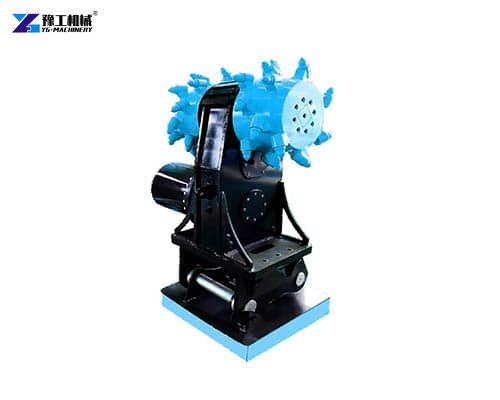
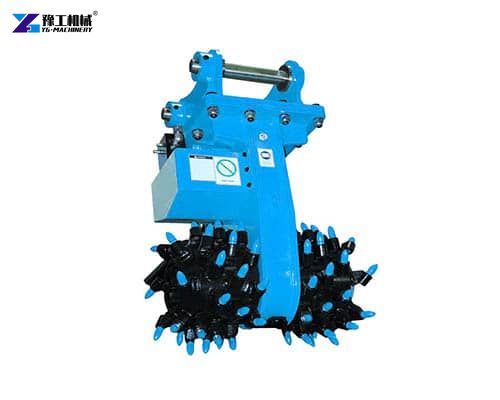
Parameter of the Excavator Milling Head
| Product Model | HX-X1 | HX-X2 | HX-Z1 | HX-Z2 | HX-D |
| Applicable Models | 6-9T | 10-18T | 20-27T | 30-40T | 45-60T |
| Machine Weight | 450kg | 550kg | 1100kg | 1250kg | 2450kg |
| Milling Width | 420mm | 650mm | 850mm | 950mm | 1150mm |
| Milling Head Diameter | 340mm | 450mm | 560mm | 660mm | 850mm |
| Number of Blade Heads | 40 | 56 | 64 | 64 | 60 |
| Recommended Speed | 95r/min | 85r/min | 78r/min | 75r/min | 55r/min |
| Recommended Flow Rate | 80L/min | 120L/min | 220L/min | 320L/min | 360L/min |
| Maximum Pressure | 35Mpa | 35Mpa | 35Mpa | 35Mpa | 35Mpa |
| Maximum Torque | 4700NM | 7000NM | 14300NM | 23300NM | 40300NM |
Features of Excavator Milling Head
The milling head for excavator stands out because of its engineered features that maximize performance and reliability. Key features typically include the following.
- High torque hydraulic motors that deliver strong cutting power even at lower rotational speeds. This helps the machine maintain stability and control while processing tough materials.
- Advanced drum design optimised for balanced rotation, minimal vibration, and improved chip evacuation. Drum geometry plays an important role in cutting efficiency and durability.
- Replaceable cutting bits or picks made from high-strength materials such as tungsten carbide allowing long service life and consistent milling results.
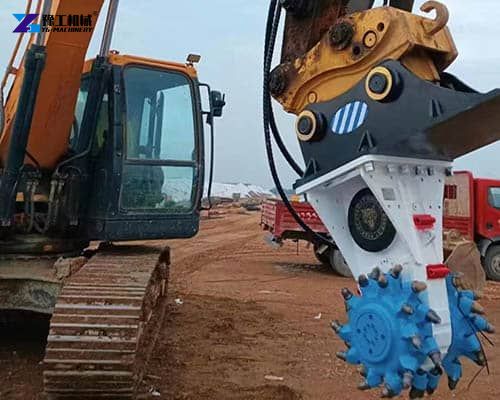
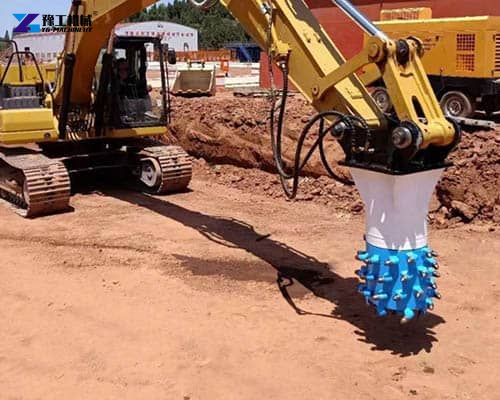
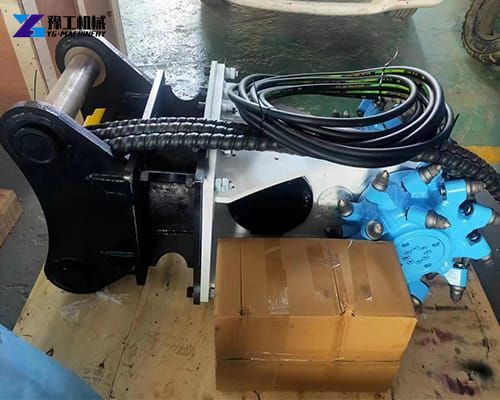
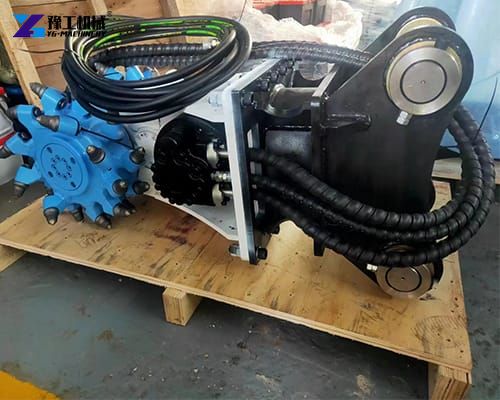
Main Structure of the Milling Head for Excavator
Understanding the core components of the excavator milling head is vital for proper operation and maintenance.
- Main Structural Components
Mounting Bracket: This plate is customised to fit the specific excavator model’s quick coupler or pin-on system, providing a secure connection point. - Housing/Frame: The robust steel chassis that protects the internal drive components and provides the necessary structural rigidity.
- Drive Mechanism: The internal assembly that receives hydraulic power from the excavator and translates it into high-torque rotation.
- Cutter Drums/Wheels: The rotating cylindrical assemblies that hold the cutting picks. Most common configurations are transverse (drums parallel to the excavator arm) or longitudinal (drums perpendicular to the arm).
- Cutting Picks: The individual, replaceable, wear components responsible for the actual cutting and material breakdown.
Common Applications of Excavator Drum Cutter
The excavator milling head is valued for its versatility and is used in a wide range of industries. Typical applications include the following.
- Road and pavement milling, where the attachment is used to remove asphalt surfaces for repairs, resurfacing, or reconstruction. It can mill narrow or irregular sections that larger road planers cannot reach.
- Concrete surface preparation and removal, such as grinding down high spots, removing damaged concrete, or preparing bridge decks and floors for new overlays.
- Rock and stone excavation, especially in tight spaces where blasting is not feasible or where controlled rock removal is needed.
- Utility trench creation, allowing clean and consistent trench profiles for cables, pipelines, and drainage systems.
- Tunnel wall profiling, enabling smooth shaping and finishing of underground spaces.
- Demolition and deconstruction tasks, where selective removal of material is required without damaging adjacent structures.
- Frozen ground milling, often used in northern climates to speed up winter excavation.
- Industrial cleaning and refurbishment projects, including the removal of coatings, scale, or contaminated material from surfaces.
Advantages of Using An Excavator Milling Head
The excavator milling head provides several advantages that significantly boost productivity and reduce operational costs.
- Enhanced precision due to the controlled and focused cutting action. Operators can remove specific layers or sections without affecting surrounding materials.
- Improved safety since the milling process reduces the need for manual breaking, handheld tools, or risky demolition methods.
- Lower environmental impact because milling generates less vibration, less dust, and less noise compared to traditional breakers or blasting.
- Cost effectiveness is achieved through faster completion times, less fuel consumption, and reduced need for additional machinery.
- Greater flexibility, as the attachment can be used for multiple tasks across different stages of a project.
How to Select the Right Drum Cutter Attachment?
Choosing the correct excavator milling head involves several considerations.
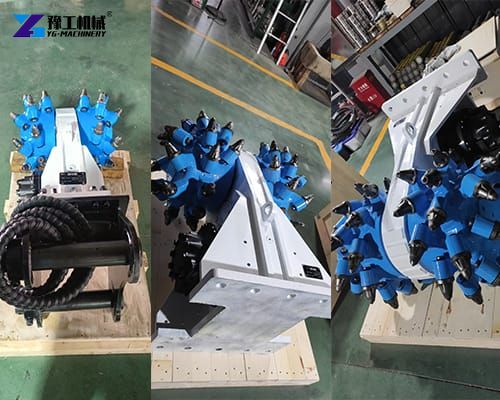
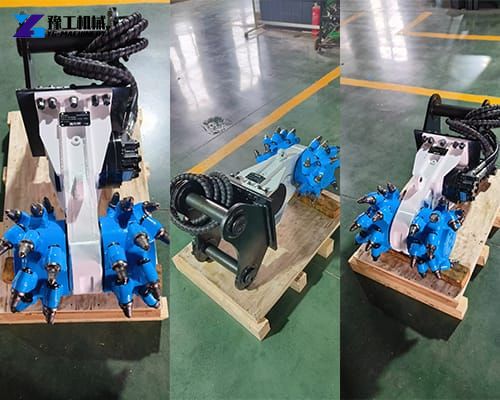
- Match the drum cutter attachment size to your excavator’s hydraulic capacity. Undersized or oversized equipment results in poor performance or mechanical stress.
- Define the primary application. Asphalt removal requires different drum configurations than rock excavation.
- Consider width and depth requirements. Projects requiring precision benefit from narrower drums whereas large surface removals need wider heads.
- Check compatibility with quick couplers or existing attachment systems.
Maintenance and Repair of Excavator Milling Heads
Proper maintenance ensures optimal performance and long service life.
- Inspect cutting bits frequently and replace worn pieces promptly. Worn bits reduce efficiency and stress the drum.
- Check hydraulic connections for leaks or loose fittings.
- Monitor drum bearings and lubrication points. Adequate lubrication prevents overheating and premature wear.
- Clean debris from housings, side plates, and drum surfaces to maintain smooth operation.
- Examine the mounting frame for cracks, bending, or loose bolts.
- Inspect seals on the motor and bearings to prevent contamination.
- Regularly clean or replace dust suppression components to ensure full functionality.