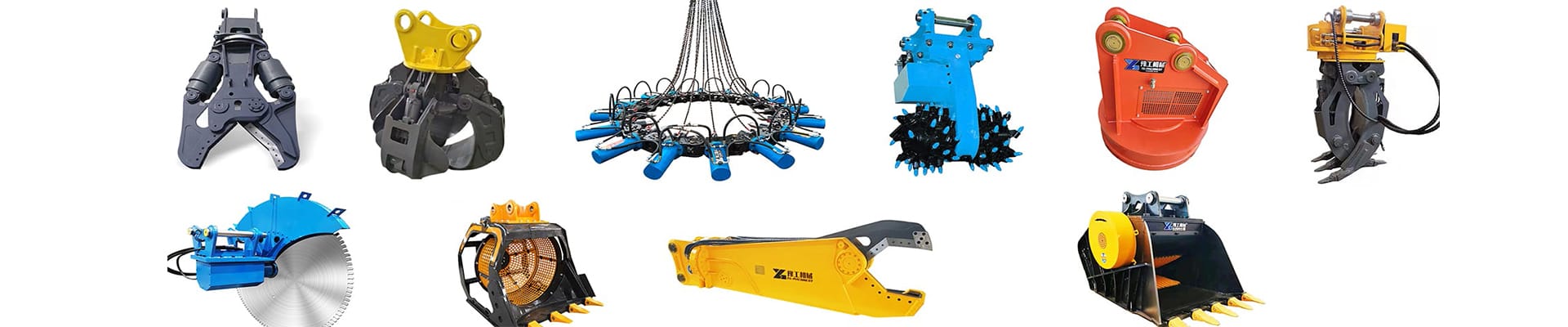
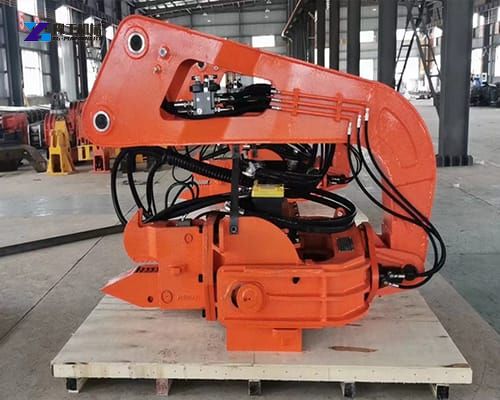
Excavator pile driver is a hydraulic piling attachment installed on an excavator to drive piles into the ground using vibration, impact, or static pressure. This system utilizes the mobility, hydraulic power, and adaptability of an excavator. This combination allows for faster setup, easier transportation, and flexible operation in confined or challenging environments. The pile driver attachment for excavator typically consists of a vibration hammer or impact hammer, a clamp mechanism to grip the pile, hydraulic hoses, and a control system integrated with the excavator. Depending on the project requirements, it can be used to install steel piles, concrete piles, sheet piles, pipe piles, wooden piles, and solar piles.
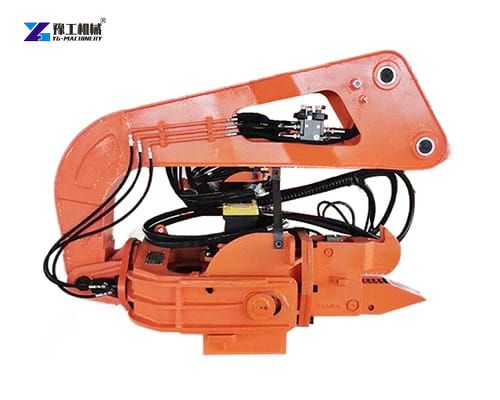
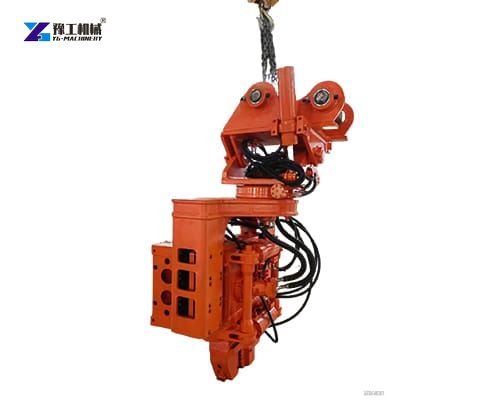
Parameter of the Excavator Pile Driver Attachment
| Model | YG-45 | YG-80 | YG-125 |
| Suitable Excavator | 12–18T | 20–27T | 30–40T |
| Working Flow Rate | 113L | 200L | 260L |
| Maximum Working Pressure | 35Mpa | 35Mpa | 35Mpa |
| Maximum Vibration Force | 343KN | 450KN | 695KN |
| Impact Frequency | 2500rpm | 2500rpm | 2080rpm |
| Maximum Pile Extraction Force | 120KN | 120KN | 168KN |
| Outer Diameter Of Pipe Piles | ≤300mm | ≤300mm | ≤300mm |
| Machine Weight | 1350KG | 2300KG | 2800KG |
| Dimension | 2306*1268*680mm | 2306*1268*680mm | 2610*1616*746mm |
Characteristics of the Pile Driver Attachment for Excavator
- High Frequency Vibration: Most modern units operate on high-frequency technology, which minimizes the resonance felt in surrounding structures. This is critical for projects in historical districts or near sensitive utility lines.
- Hydraulic Integration: The attachment taps directly into the excavator’s hydraulic system. This means the power output is consistent and easily controlled from the operator’s cabin.
- Versatility of Media: These machines are not limited to one type of pile. They can effectively drive sheet piles, H-beams, C-channel piles, pipe piles, and even timber poles.
- Rapid Deployment: Unlike dedicated rigs that require hours or days to assemble, an excavator pile driver can be ready to work within minutes of arriving at the job site.
How Does It Work? – The Physics of Vibration
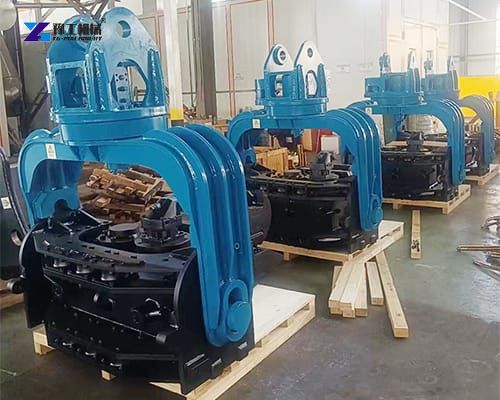
The working principle of a vibratory pile driver is based on the reduction of friction. When the eccentric weights inside the hammer spin, they create a centrifugal force. This force is directed vertically, causing the pile to vibrate rapidly. As the pile vibrates, the soil particles immediately adjacent to it begin to move. This process, known as soil liquefaction, temporarily reduces the friction between the soil and the pile. Under the combined weight of the hammer and the downward pressure from the excavator arm, the pile literally slides into the ground as if it were cutting through butter.
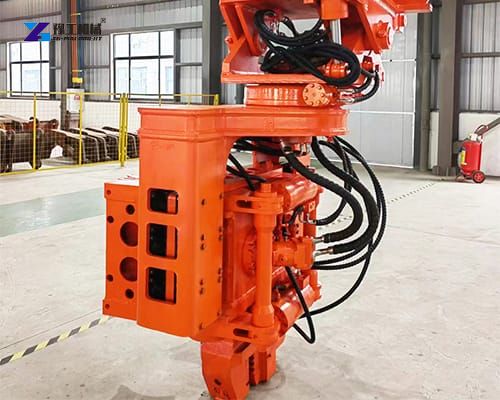
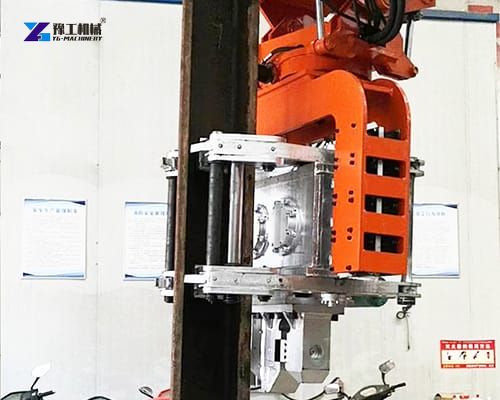
Excavator Pile Driver Applications Across Industries
- Urban Infrastructure: Driving sheet piles for trench shoring during the installation of water pipes, sewage lines, or fiber optic cables.
- Maritime Construction: Building piers, wharves, and bulkheads. The long reach of an excavator allows it to work from the shore or from a barge to drive piles into the seabed.
- Renewable Energy: Installing the foundations for solar farms. Excavator pile drivers are exceptionally fast at driving the thousands of small posts required for solar arrays.
- Bridge Engineering: Setting up temporary cofferdams to allow for the dewatering of bridge pier construction sites.
- Environmental Protection: Creating slurry walls or containment barriers to prevent the spread of contaminated groundwater.
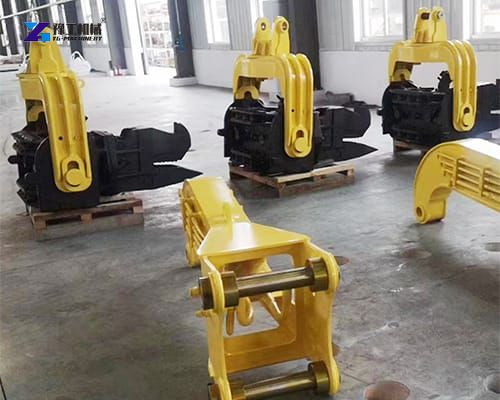
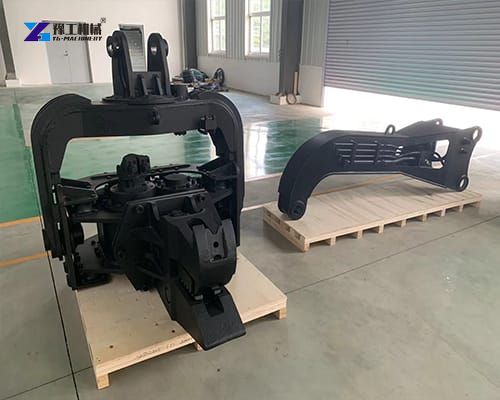
Strategic Purchasing: How to Choose the Proper Model
- Match the pile driver attachment to the Excavator: This is the most common mistake. Every vibratory pile driver has a required hydraulic flow and pressure. If your excavator’s pump cannot provide enough oil, it will underperform. Conversely, it is too heavy for the excavator can tip the machine or damage the boom.
- Soil Analysis: Are you working in soft clay, loose sand, or hard compacted gravel? Vibratory pile driver attachments excel in non-cohesive soils, sand, and gravel, while impact hammers are often better for stiff clays or rocky ground.
- Clamping Force: Ensure the hydraulic clamp has a rated force significantly higher than the weight of the piles you intend to drive. A slipping pile is a major safety hazard and leads to inefficient driving.