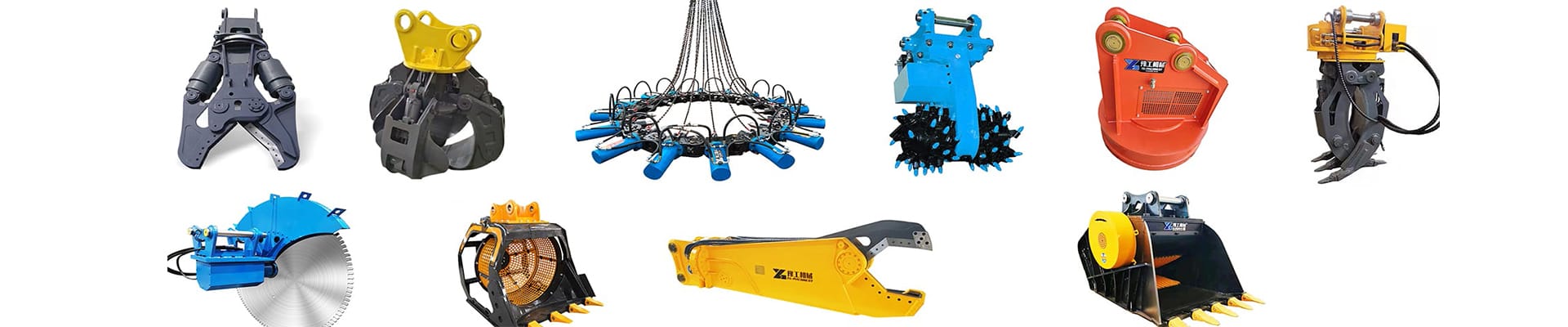
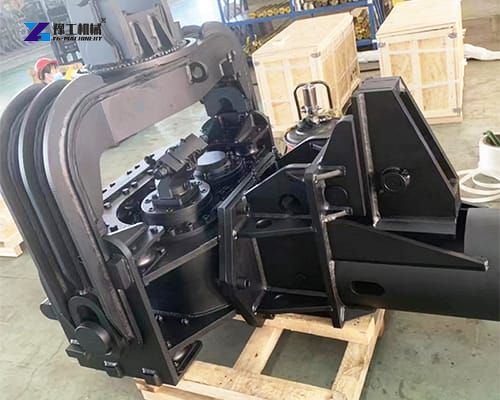
The vibratory pile driver for excavator is a specialized hydraulic attachment designed to drive or pull piles into the ground using vibration rather than impact. Vibratory pile drivers use high-frequency vibrations to reduce soil resistance and allow piles to penetrate the ground smoothly. It use a resonance-based approach. By vibrating the pile at a specific frequency, the internal friction of the soil surrounding the pile is significantly reduced, effectively liquefying the soil particles and allowing the pile to sink under its own weight and the downward pressure of the excavator arm. When integrated with an excavator, the vibratory pile driver for an excavator becomes even more efficient. Excavators are widely available, mobile, and adaptable, making them ideal carriers for vibratory pile drivers. This combination reduces the need for dedicated piling rigs, lowers transportation costs, and enhances on-site flexibility.
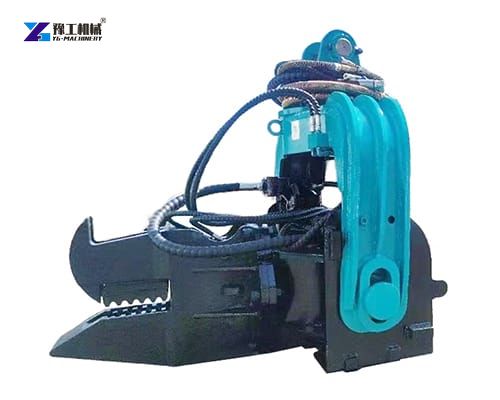
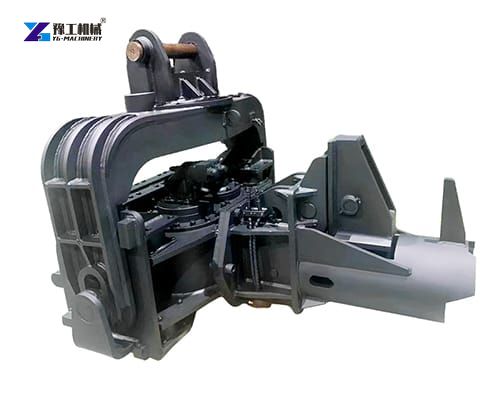
Parameter of the Vibratory Pile Driver for Excavator
| Model | YG-45 | YG-80 | YG-125 |
| Suitable Excavator | 12–18T | 20–27T | 30–40T |
| Working Flow Rate | 113L | 200L | 260L |
| Maximum Working Pressure | 35Mpa | 35Mpa | 35Mpa |
| Maximum Vibration Force | 343KN | 450KN | 695KN |
| Impact Frequency | 2500rpm | 2500rpm | 2080rpm |
| Maximum Pile Extraction Force | 120KN | 120KN | 168KN |
| Outer Diameter Of Pipe Piles | ≤300mm | ≤300mm | ≤300mm |
| Machine Weight | 1350KG | 2300KG | 2800KG |
| Dimension | 2306*1268*680mm | 2306*1268*680mm | 2610*1616*746mm |
Advantages of Excavator Vibratory Pile Driver
- High efficiency is one of the most significant benefits. Vibratory piling can be several times faster than impact hammering, especially in sandy and granular soils. This efficiency translates into shorter project timelines and lower operating costs.
- Environmental friendliness is another key advantage. Vibratory pile drivers generate less noise and vibration compared to traditional diesel hammers. This makes them suitable for urban areas, residential zones, and environmentally sensitive sites.
- Versatility is a major strength. Mounted on excavators of various sizes, vibratory pile drivers can operate in diverse terrains and confined spaces. They can be easily transported and mobilized between job sites.
- Precision and control are enhanced due to smooth vibration and stable pile handling. This results in better verticality and alignment, reducing rework and improving structural integrity.
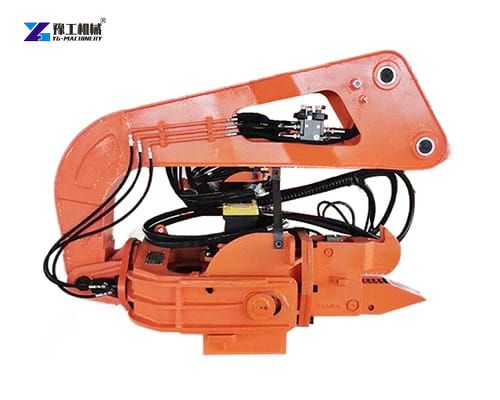
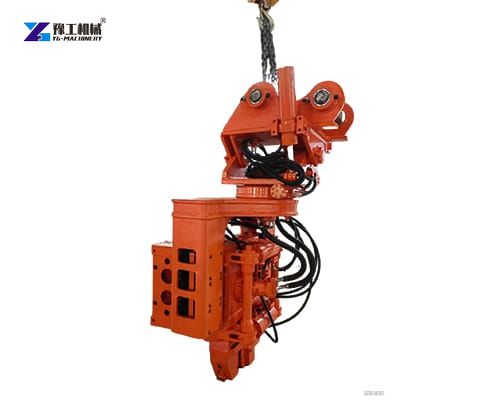
How Does the Excavator Pile Driver Work?
The physics behind a vibratory pile driver for excavator is centered on the concept of soil fluidization. When the vibration frequency matches the resonance of the soil, the internal friction of the soil is momentarily reduced.
When the operator activates the attachment, the hydraulic fluid flows into the motors, spinning the eccentric weights in opposite directions. The horizontal forces cancel each other out, while the vertical forces combine to create a powerful oscillating movement.
As the pile begins to vibrate, the soil grains rearrange themselves, creating a liquid-like state. This allows for a smooth penetration process. Conversely, when it comes to extraction, the same process is used to break the skin friction, allowing the excavator to pull the pile out of the ground with significantly less effort than a static pull would require.
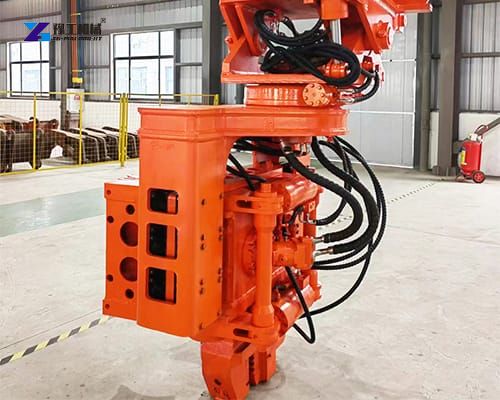
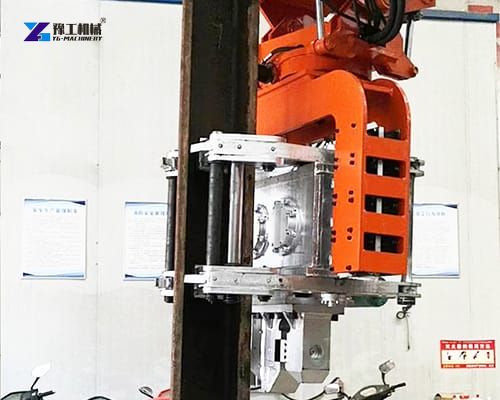
Wide Applications of Excavator Pile Driver Attachment
The vibratory pile driver for excavator is widely used across multiple industries and construction scenarios.
- In foundation construction, it is commonly used for building foundations, retaining walls, and temporary support structures. Sheet pile walls for excavation support are installed quickly and accurately.
- In infrastructure projects, vibratory pile drivers are essential for bridges, highways, railways, and ports. They are particularly effective for driving steel piles and pipe piles in large scale civil works.
- In renewable energy projects, vibratory pile drivers play an important role in installing piles for solar power plants, wind farms, and transmission lines.
How to Choose the Proper Vibratory Pile Driver?
Selecting the right vibratory pile driver for excavator requires careful evaluation of several factors.
- Excavator size and hydraulic capacity are critical. The weight and hydraulic flow requirements of the vibratory pile driver must match the excavator specifications to ensure safe and efficient operation.
- Pile type, size, and length influence the required vibration force and clamp capacity. Larger and longer piles demand higher centrifugal force.
- Soil conditions play a significant role. Dense clay, gravel, and mixed soils may require higher vibration amplitude and power compared to loose sand.
- Project environment, including noise restrictions and space limitations, should be considered when selecting vibration frequency and optional noise reduction features.
Maintenance and Safety Best Practices
To ensure the longevity of your vibratory pile driver for excavator and the safety of your crew, a strict maintenance schedule is required.
- Regular Lubrication
The gearbox of the vibratory driver operates under extreme conditions. Gear oil must be checked daily and changed according to the intervals. - Inspection of Clamping Jaws
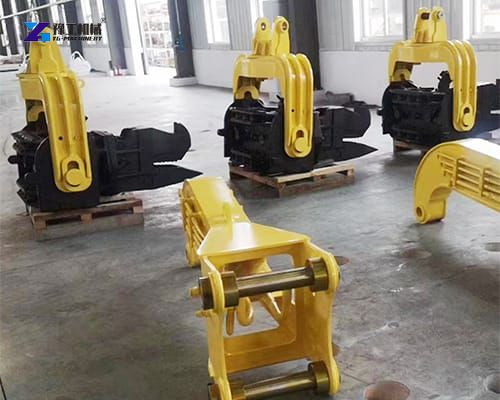
The teeth on the hydraulic clamps are subject to immense wear. If the teeth become dull, the clamp may slip, causing damage to the pile or creating a safety hazard. Inspect the jaws daily and replace them as soon as significant wear is detected. - Hydraulic Hose Management
Because the attachment vibrates and moves through a wide range of motion, hydraulic hoses are prone to chafing and fatigue. Use protective sleeves and ensure hoses are routed properly to prevent them from getting caught in the pile or the excavator arm. - Operator Training
Only trained personnel should operate a vibratory pile driver for excavator. The operator must understand the load charts of the excavator and be aware of how the vibration affects the stability of the machine, especially when working on soft ground or near the edge of excavations.