
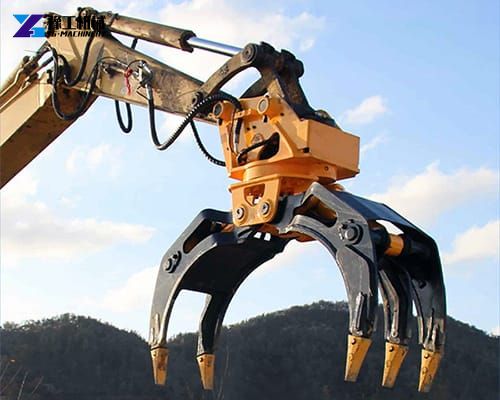
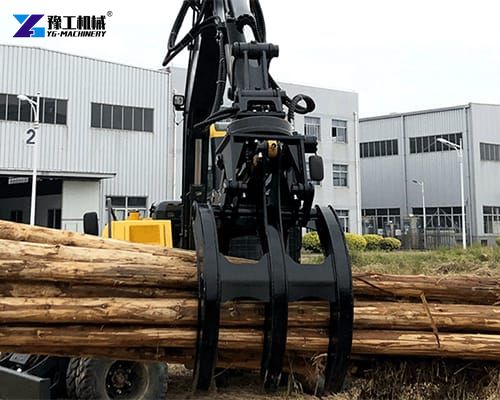
Log grapple for excavator is a hydraulic attachment designed to grasp, lift, move, and stack logs or similar materials. It is mounted at the end of an excavator arm, replacing or supplementing a bucket. Different from a standard bucket that scoops material, a grapple uses curved jaws powered by hydraulic cylinders to securely clamp onto objects. The design allows operators to handle irregularly shaped loads such as tree trunks, branches, poles, pipes, scrap metal, and demolition debris. The grapple’s gripping capability provides better control compared to traditional lifting methods, making it ideal for precision tasks and heavy-duty operations.
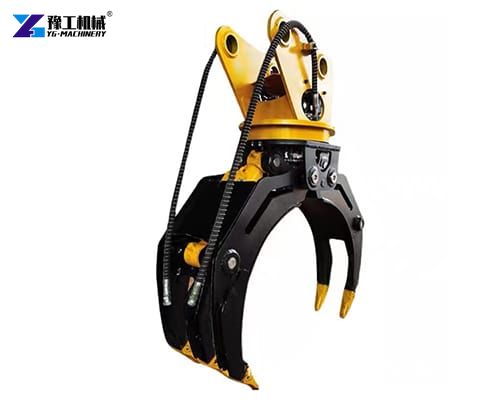
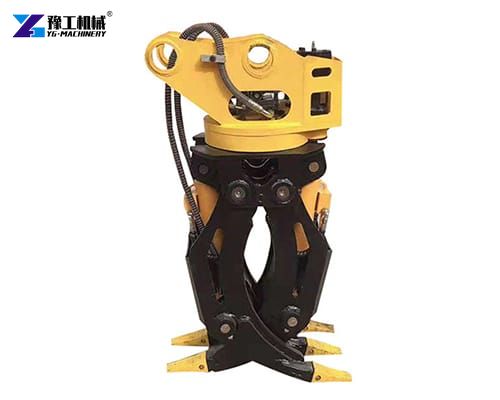
Parameter of the Log Grapple for Excavator
| Model | YGSR02A | YGSR04A | YGSR06A | YGSR08A | YGSR10A | YGSR14A |
| Suitable Excavator | 4-6T | 7-11T | 12-16T | 17-23T | 24-30T | 31-40T |
| Weight | 360kg | 440kg | 900kg | 1850kg | 2150kg | 2600kg |
| Max Jaw Opening | 1200mm | 1400mm | 1600mm | 2100mm | 2500mm | 2800mm |
| Working Pressure | 110-140bar | 120-160bar | 150-170bar | 160-180bar | 160-180bar | 180-200bar |
| Set Up Pressure | 170bar | 180bar | 190bar | 200bar | 210bar | 250bar |
| Working Flow | 30-55Ipm | 50-100Ipm | 90-110Ipm | 100-140Ipm | 130-170Ipm | 200-250Ipm |
| Cylinder Volume | 4.0*2T | 4.5*2T | 8.0*2T | 9.7*2T | 12*2T | 12*2T |
Features of the Excavator Log Grab
- High Strength Steel Construction
The log grapple for excavator are manufactured from high-tensile alloy steel to ensure durability under extreme working conditions. Reinforced pivot points and hardened pins reduce wear and extend service life. - Hydraulic Clamping Power
The hydraulic system delivers a strong and consistent clamping force. This ensures logs are held securely during lifting and transportation, minimizing the risk of slipping or dropping. - 360 Degree Rotation
Many advanced models include a hydraulic rotator that allows full 360-degree rotation. This feature enhances maneuverability and precision, particularly when stacking logs or loading trucks. - Optimized Jaw Design
Curved or claw-shaped jaws are engineered to maximize contact with logs while maintaining flexibility to handle various diameters. Some designs feature interlocking teeth for improved grip. - Compatibility With Different Excavator Sizes
Log grapples are available for mini excavators, medium-sized machines, and large construction excavators. This adaptability allows operators to match the attachment to their equipment capacity.
Excavator Log Grapple Structural Components
- Main Frame
The main frame forms the backbone of the attachment. It supports the jaws and connects to the excavator arm through a mounting bracket. - Grapple Jaws
These are the curved arms that open and close around the material. They are usually reinforced with wear-resistant steel. - Hydraulic Cylinders
Cylinders power the opening and closing motion of the jaws. Their size and pressure rating determine the gripping force. - Rotator Unit
If equipped, the rotator allows 360-degree rotation, improving flexibility in load positioning. - Pins and Bushings
Heavy-duty pins and bushings ensure smooth movement at pivot points and withstand high stress. - Hydraulic Hoses and Fittings
These components transmit hydraulic fluid from the excavator to the grapple, enabling efficient operation.
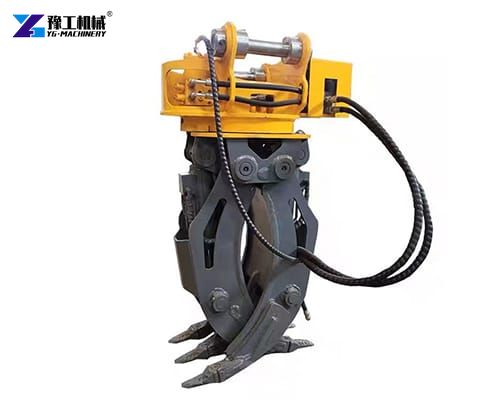
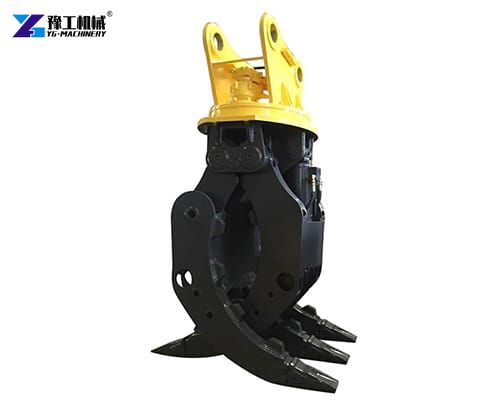
Applications of Log Grapple for Excavator
- Forestry Operations
In forestry, log grapples are essential for loading harvested timber, sorting logs by size, and clearing branches. They significantly reduce manual handling and increase operational speed. - Sawmills and Lumber Yards
At sawmills, log grapples facilitate efficient unloading of timber trucks, stacking logs, and organizing storage areas. Precision handling minimizes damage to valuable wood. - Land Clearing and Agriculture
During land clearing projects, grapples help remove tree stumps, brush, and roots. In agricultural settings, they can handle hay bales, fence posts, and other bulky materials. - Construction and Demolition
Construction sites often require moving large amounts of debris or pipes. A log grapple offers better control than a bucket when dealing with irregular materials. - Recycling and Scrap Handling
Scrap yards use grapples to manage metal waste, wooden pallets, and recyclable materials. The strong clamping force ensures secure handling of heavy scrap.
Advantages of Using Log Grab for Excavator
Increased Productivity
The log grapple for excavator allows operators to grab and transport multiple logs at once, reducing the number of cycles needed. This directly translates to faster project completion.
Improved Safety
Manual log handling poses significant risks. Using a hydraulic grapple reduces human involvement in hazardous tasks, minimizing workplace injuries.
Versatility
Beyond logs, the grapple can handle rocks, poles, pipes, and debris. This multifunctionality maximizes the return on investment.
Working Principle of the Hydraulic Log Grapple
The working principle is based on hydraulic power transmission. When the operator activates the control lever inside the excavator cabin, hydraulic fluid flows through hoses into the grapple’s cylinders. The pressure generated by the hydraulic system pushes the piston within the cylinder, causing the jaws to close around the log. Once secured, the excavator arm lifts and transports the load. If equipped with a rotator, hydraulic power also controls rotational movement, allowing precise alignment before placement. This system ensures smooth, controlled, and powerful gripping action.
How to Choose the Right Log Grapple for an Excavator?
- Assess Excavator Compatibility
Ensure the attachment matches the excavator’s weight class and hydraulic flow rate. Compatibility prevents mechanical issues and ensures optimal performance. - Define Application Needs
Different tasks require different jaw designs. For example, forestry operations may prioritise large capacity and strong grip, while recycling may require greater precision. - Check Hydraulic Requirements
Confirm that the excavator’s hydraulic system can support the grapple’s pressure and flow specifications.