
Excavator clamshell bucket is a specialized hydraulic-driven excavator attachment designed for grabbing, clamping, lifting, and loading bulk and irregular materials. Unlike traditional digging buckets that rely on scooping and shoveling movements, the clamshell grab bucket features a unique double-shell hinged structure that opens and closes like a clamshell, hence the name. It can adapt to various working environments, including narrow construction spaces, deep water dredging sites, and messy waste sorting yards. We provide the clamshell bucket attachments to interface seamlessly with a wide range of excavator sizes, transforming a standard machine into a highly efficient vertical digging and loading powerhouse. Do you want to find the proper model for your excavator? Welcome to contact us freely to learn more details.
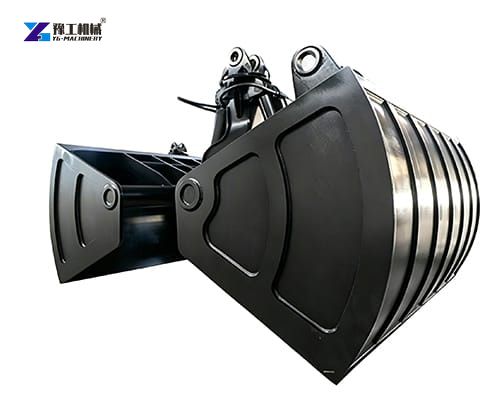
Excavator Clamshell Bucket Parameters
| Item/Model | Unit | YGCS04 | YGCS06 | YGCS08 | YGCS10 |
| Suitable Excavator | ton | 7-11 | 12-18 | 18-25 | 26-35 |
| Weight | kg | 800 | 1200 | 2000 | 2300 |
| Opening | mm | 1000 | 1500 | 2200 | 2300 |
| Working Pressure | bar | 180 | 210 | 250 | 250 |
| Set Up Pressure | bar | 250 | 290 | 320 | 340 |
| Working Flow | lpm | 190 | 210 | 220 | 240 |
Advantages of Choosing the Excavator Clamshell Bucket
Unmatched Vertical Efficiency
Because the excavator clamshell bucket operates via a direct downward and upward motion, it eliminates the need for extensive machine positioning. This saves valuable fuel and reduces track wear on your excavator.
Superior Material Retention
The tight, precision-machined seal between the two shells ensures that fine materials like dry sand or loose grain do not leak during transit. This keeps your work environment cleaner and ensures you deliver the exact payload intended.
Enhanced Operator Safety
By allowing the excavator to remain on stable ground while digging deep or reaching over barriers, our attachment keeps your operators and your machinery out of hazardous zones like unstable trench edges.
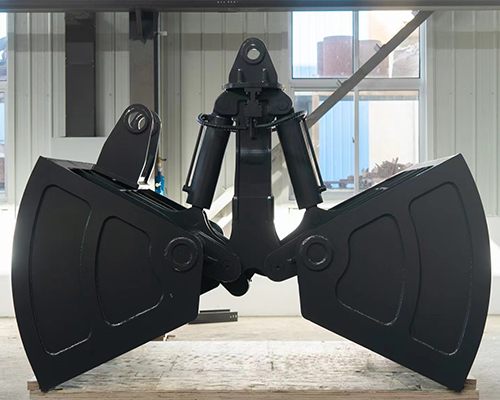
Applications And Versatility Across Industries
Deep Foundation Excavation
When digging deep shafts, bridge piers, or subway foundations, standard boom movements are restricted. Our excavator clamshell bucket attachment excels at vertical digging, plunging straight down into caissons to retrieve material from extreme depths.
Marine Dredging and River Cleaning
Cleaning waterways and clearing silt requires an attachment that can penetrate water and grab wet mud effectively. Our marine-optimized designs feature water evacuation ports that let liquid drain out while retaining the solid silt and gravel.
Bulk Material Handling
In port terminals, rail yards, and recycling facilities, moving massive volumes of sand, coal, gravel, or scrap metal quickly is critical. The wide opening span of our shells allows operators to grab maximum volume in a single pass.
Urban Utility Trenching
Working in tight city spaces means you cannot swing a traditional boom wide. The vertical functionality of this tool allows for precise, narrow digging around existing utility lines with minimal disturbance to the surrounding pavement.
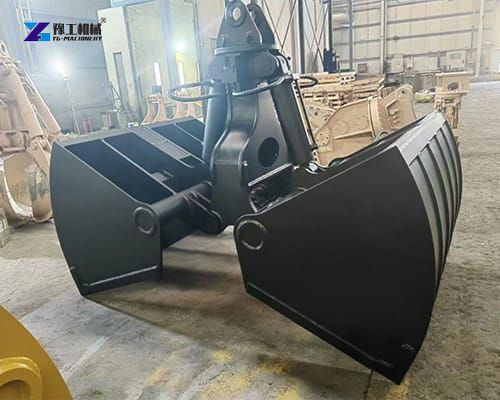
How Does It Work? – The Underlying Working Principle
The operational mechanics of this tool are elegant yet incredibly powerful. The entire process relies on the hydraulic system of your excavator, typically utilized through the auxiliary piping lines.
When the operator actuates the control inside the cab, hydraulic fluid is pumped into the top of the cylinders, extending the rods. This extension pushes the mechanical equalizer bars outward, forcing the two shells to open to their maximum width.
The operator then lowers the open bucket vertically into the material pile. As the tool settles, the operator reverses the hydraulic flow. The cylinders retract, pulling the shells together with immense closing pressure. The cutting edges shear through the material, meeting perfectly at the center to trap the payload inside.
Once closed, the operator lifts the excavator clamshell bucket and swings it over the target truck or hopper. Re-extending the cylinder parts to the shells, allowing gravity to cleanly drop the material exactly where it needs to go.
Factors to Consider When Purchasing
First, know your excavator’s hydraulic flow and pressure. The bucket’s cylinders need sufficient oil volume to close within a reasonable time. If the flow is too low, the closure will be sluggish. If too high, you risk damaging seals. Always match the excavator clamshell bucket’s required flow to your excavator’s auxiliary output.
Second, consider the working weight. A clamshell adds significant weight to the stick, which reduces the excavator’s lifting capacity. Balance the bucket weight against the expected load. Heavier buckets are more durable but eat into your payload.
Third, evaluate the material you handle most. For abrasive sand and gravel, opt for hardened steel liners and bolt-on wear plates. For demolition, choose extra-thick shells and reinforced hinge areas. For delicate loads, consider rubberized or smooth-edged jaws.
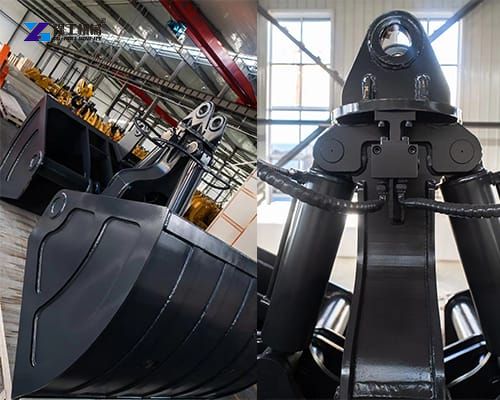
Fourth, decide on rotation. If you work in tight sites where you cannot reposition the machine frequently, a rotator is a must. If you always dump in the same direction, a fixed orientation saves cost.
Fifth, look at the pin sizes. Larger diameter pins last longer and reduce slop over time. Ask about the bushing material and whether they are greaseable.