
Hydraulic clamshell bucket is an excavator attachment that operates using hydraulic cylinders to open and close two symmetrical shells, resembling a clamshell. These shells are designed to scoop, grab, or release materials such as sand, gravel, mud, coal, scrap metal, and construction debris. Designed for precision, strength, and deep-grabbing capability, this equipment has become essential for projects that require lifting, loading, or transferring bulk materials in confined or challenging environments. From ports and dredging operations to construction sites and mining applications, the clam bucket for excavator delivers performance that traditional manual or mechanical buckets cannot match.
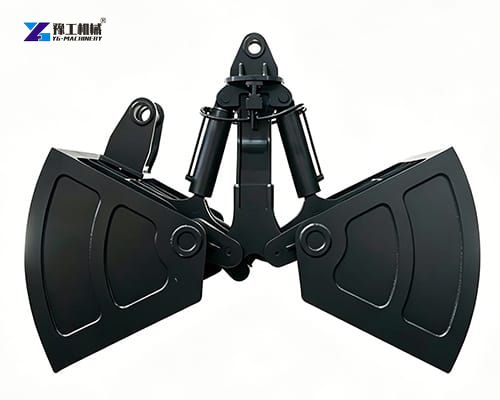
Specifications of the Hydraulic Clam Shell Bucket
| Item/Model | Unit | YGCS04 | YGCS06 | YGCS08 | YGCS10 |
| Suitable Excavator | ton | 7-11 | 12-18 | 18-25 | 26-35 |
| Weight | kg | 800 | 1200 | 2000 | 2300 |
| Opening | mm | 1000 | 1500 | 2200 | 2300 |
| Working Pressure | bar | 180 | 210 | 250 | 250 |
| Set Up Pressure | bar | 250 | 290 | 320 | 340 |
| Working Flow | lpm | 190 | 210 | 220 | 240 |
Features of Hydraulic Clamshell Bucket
First, it offers a high gripping force generated by hydraulic cylinders, allowing it to handle dense and heavy materials without slippage.
Second, it provides smooth and controlled movement, ensuring accurate material pickup and release.
Third, it is built with high-strength steel to withstand abrasive and high-impact environments.
Another important feature is its adaptability. It can be customized in terms of size, capacity, and configuration depending on project requirements.
In some configurations, smaller models weigh around 800 kg and are suitable for compact excavators, while larger industrial versions can exceed 2000 kg and are designed for heavy-duty operations.
These variations typically match excavators ranging from 7-ton to 35-ton classes. For more configuration, please contact us to customize.
Structure and Main Components
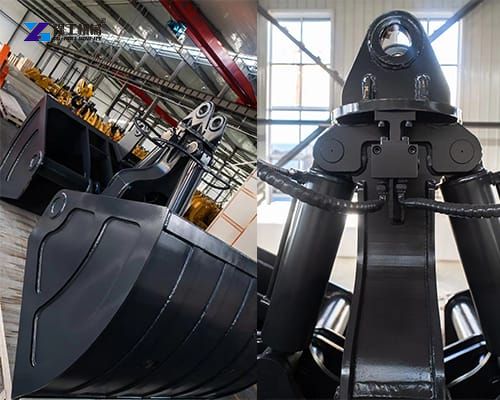
The hydraulic clamshell bucket consists of several essential components that work together to ensure efficient operation.
The bucket shells are the most visible part, designed to hold materials securely. These shells are usually made of wear-resistant steel to extend service life.
Hydraulic cylinders are the driving force behind the opening and closing mechanism. They convert hydraulic energy into mechanical motion, enabling smooth and powerful operation.
The rotator or hinge system connects the shells and ensures balanced movement during operation. It allows the bucket to align correctly with the material surface.
The frame structure provides stability and strength, supporting the entire assembly during heavy lifting.
Hydraulic hoses and connectors deliver pressurized fluid from the excavator or crane to the cylinders, enabling continuous operation.
Working Principle of Excavator Clamshell Bucket
The working principle of a hydraulic clamshell bucket is based on hydraulic power transmission. When hydraulic fluid is supplied from the excavator or crane system, it enters the cylinders attached to the bucket.
As pressure increases, the cylinders extend or retract, causing the bucket shells to open or close. When the shells close, they trap material between them. Once lifted, the bucket can transport the material to a designated location and release it by reversing the hydraulic flow.
This system allows operators to precisely control the amount of material being handled, improving efficiency and reducing spillage. The hydraulic system also provides a consistent force, ensuring reliable performance even in deep excavation or underwater environments.
Applications of Clamshell Bucket for Sale
The clamshell grab bucket is widely used across multiple industries due to its flexibility and efficiency.
In construction, it is used for digging foundations, handling soil, and transferring construction debris.
In dredging operations, it is essential to remove sediment from rivers, lakes, and ports. In mining, it is used to handle ores, gravel, and bulk minerals.
Ports and shipping terminals rely heavily on hydraulic clamshell buckets for loading and unloading bulk cargo such as coal, grain, and sand.
Waste management facilities use them to handle scrap and recyclable materials efficiently.
Additionally, they are widely used in tunnel construction and deep foundation projects where space is limited and precision is critical.
Advantages of Clam Shell Bucket
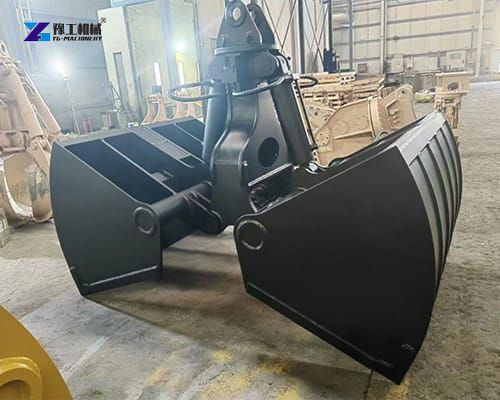
The hydraulic clamshell bucket offers several advantages over traditional excavation tools.
One of the most significant benefits is its high efficiency. The hydraulic system allows faster cycle times, enabling more material to be handled in less time.
Another advantage is precision. Operators can control the bucket movement with great accuracy, reducing material loss and improving operational control.
It also provides versatility, as it can be used in different environments, including underwater, confined spaces, and high-depth excavation zones.
Durability is another key benefit. With reinforced steel construction and advanced hydraulic systems, the bucket can withstand harsh working conditions for long periods.
Finally, it reduces labor requirements and improves safety by minimizing manual handling of heavy materials.
Performance Analysis and Technical Considerations
When analyzing the performance of a hydraulic clamshell bucket, several factors must be considered.
Bucket capacity determines how much material can be handled per cycle. Larger capacities increase productivity but may require more powerful hydraulic systems.
Hydraulic pressure and flow rate directly affect the strength and speed of operation. Typical working pressures vary depending on model size, often ranging from moderate to high pressure systems to ensure optimal performance.
Excavator compatibility is also critical. A mismatch between bucket size and machine capacity can lead to reduced efficiency or mechanical strain.
Structural weight influences stability and handling. Lightweight models improve speed, while heavier models provide greater digging force.
How to Select the Ideal Clamshell Grab Bucket ket for Your Projects?
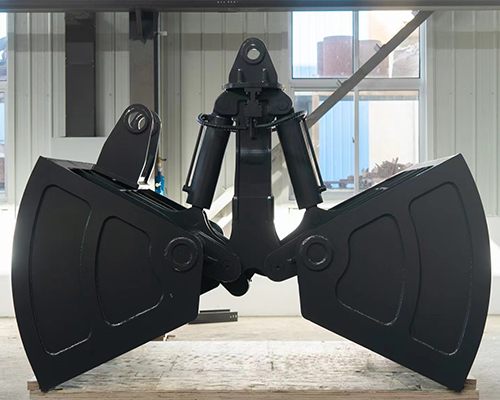
First, verify the lift capacity and hydraulic compatibility of your excavator. The total weight of the fully loaded bucket must never exceed the safe lifting capacity of the excavator at its maximum reach.
Second, match the shell design to the material density. Materials with high density, such as wet sand, iron ore, or compacted clay, require heavily reinforced, narrower shells with integrated teeth to ensure deep penetration and prevent overloading the hydraulic system. Conversely, lightweight bulk materials like agricultural grains, coal, or wood pellets can be handled with much wider, high-volume light-duty shells that maximize the tonnage moved per cycle.
Third, consider the environmental context. If your primary focus is underwater dredging, ensure the hydraulic clamshell bucket is specified with marine-grade anti-corrosion coatings, specialized cylinder seals to keep out water and sand, and appropriate drainage vents to allow water to escape while retaining the solid material.