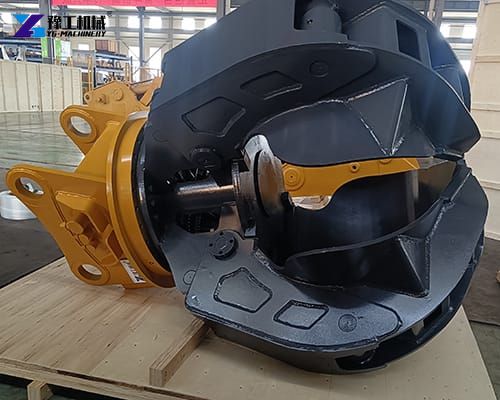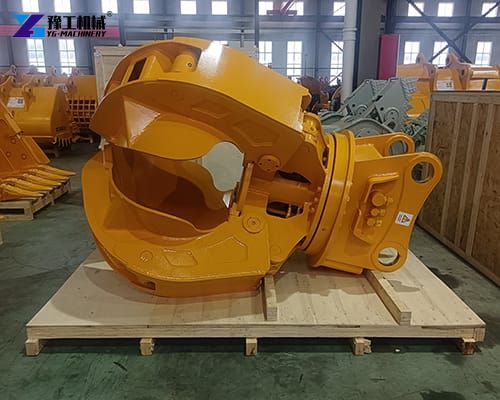
Scrap metal grapple stands as a valuable attachment for modern excavators operating within scrap yards, demolition sites, ship dismantling facilities, and metal recycling hubs. Recycling professionals deal with tangled piles of steel fragments, discarded machinery, irregular metal scraps, and heavy structural waste. Conventional digging buckets struggle to grip uneven, loose metal materials effectively, leading to wasted cycles, lost productivity, and unnecessary safety risks. The scrap metal grapple is purpose-built to resolve these challenges, delivering reliable clamping power, flexible movement, and consistent handling performance for all varieties of ferrous and non-ferrous scrap. If you are looking for this machine, please contact us to find a suitable model for your business.
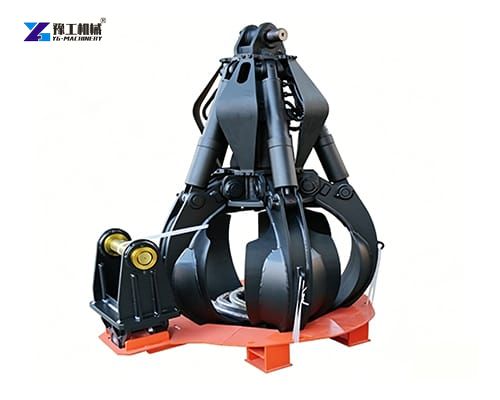
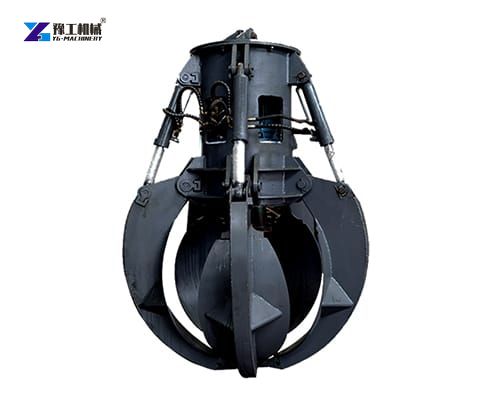
Scrap Metal Grapple Parameters
| Model | YG-04A | YG-06A | YG-08A | YG-06B | YG-08B |
| No. of Jaw | 4/5 piece | 4/5 piece | 4/5 piece | 4/5 piece | 4/5 piece |
| Suitable Excavator | 6-9T | 10-17T | 18-25T | 10-17T | 18-25T |
| Weight | 355/420kg | 900/1000kg | 1650/1900kg | 850/1000kg | 1700/1950kg |
| Max. Opened Grapple | 1200mm | 1600mm | 2050mm | 1900mm | 2500mm |
| Height of Opened Grapple | 1000mm | 1500mm | 1700mm | 1550mm | 2000mm |
| Working pressure | 200bar | 260bar | 320bar | 260bar | 320bar |
| Working flow | 50-100lpm | 60-120lpm | 200-250lpm | 60-120lpm | 200-250lpm |
| Capacity | 0.3m³ | 0.4m³ | 0.8m³ | 0.5m³ | 1m³ |
Core Structural Composition of A Scrap Metal Grapple
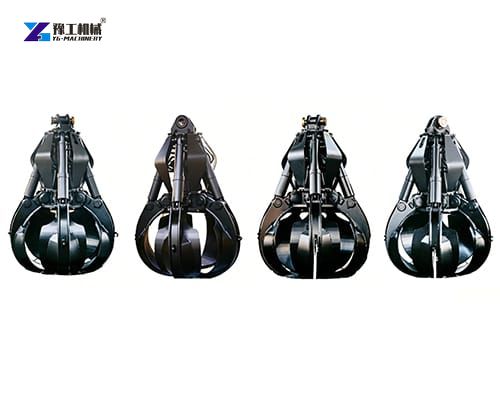
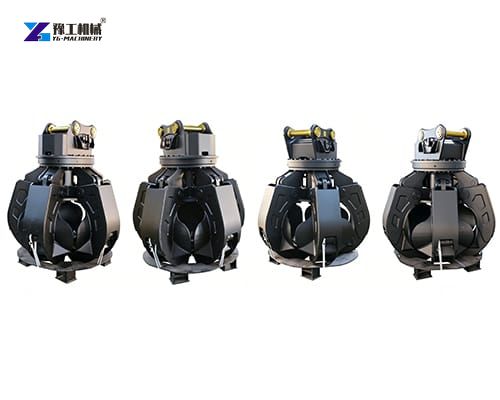
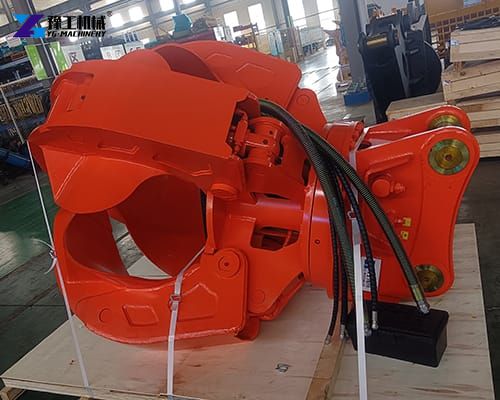
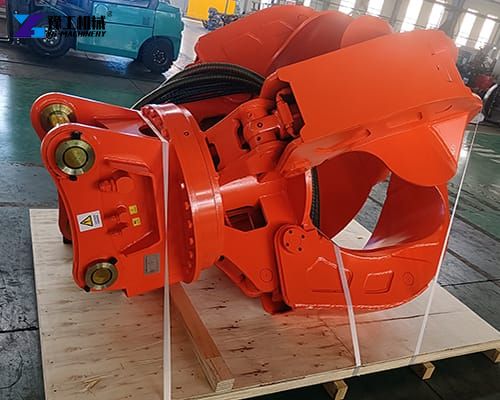
A complete grapple assembly contains several interconnected core components working in harmony. The mounting bracket serves as the connection point between the grapple and excavator arm, and most models support quick hitch installation for fast attachment switching. The central rotating unit, present on most modern units, enables full angular adjustment so operators can position loads without repositioning the entire carrier machine.
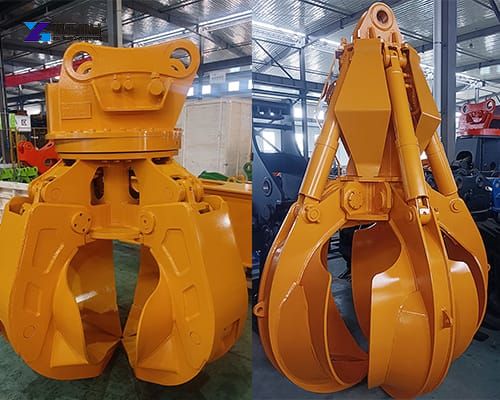
The jaws, also referred to as tines, form the working end of the grapple. Popular configurations include four-jaw and five-jaw designs, each suited to distinct material types. Four-jaw units perform well for large, bulky metal pieces such as steel beams and vehicle frames. Five-jaw variants create tighter contact surfaces, making them ideal for grabbing scattered small scrap fragments and fragmented metal waste. Thick manganese steel forms the jaw body, while replaceable wear plates protect areas that receive constant friction against sharp scrap metals.
Hydraulic cylinders deliver the clamping force required to secure heavy loads. High-quality grapples use double-acting cylinders to control jaw opening and closing, with reinforced rod protection to avoid scratches from jagged metal. Linkage arms transfer cylinder movement evenly across all jaws, ensuring balanced closing motion and preventing uneven wear on individual tines. Hydraulic hoses and connection manifolds channel pressurized fluid from the excavator main hydraulic system to each cylinder, with robust fittings to resist leakage during high intensity work cycles. Every pivot point contains pins and bushings that require regular lubrication to eliminate metal-on-metal friction.
Working Principle Behind Hydraulic Scrap Metal Grapple
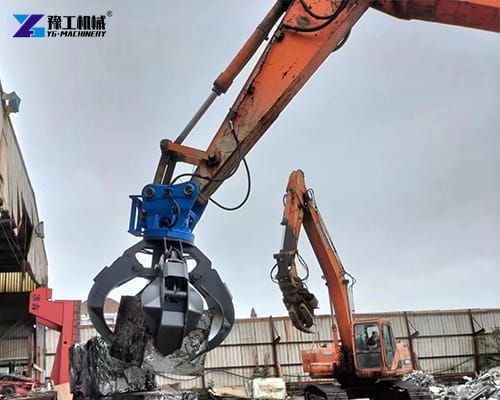
Operators control grapple movement through auxiliary hydraulic circuits fitted on the carrier machine. First, the operator maneuvers the excavator arm to position the open grapple above the target scrap pile. Hydraulic oil flows into the rod side of the cylinders to push the jaws fully open. Once aligned over the load, the operator lowers the grapple into the scrap pile. Direction of hydraulic flow reverses, pushing fluid into the base end of each cylinder. As cylinder rods extend, the linkage system pulls the jaws inward to wrap firmly around scrap materials. Continuous hydraulic pressure maintains clamping force to stop materials slipping during lifting and transport.
After moving the secured scrap to the unloading zone, the operator triggers the control lever again to reverse fluid flow once more. Cylinders retract, forcing jaws outward and releasing the scrap load into trucks, sorting bays or processing machinery. Units equipped with rotation motors add an extra layer of flexibility. The rotation drive receives pressurized hydraulic flow to spin the entire grapple assembly, allowing operators to rotate loads and align materials precisely without repositioning the excavator tracks. Smooth coordination between hydraulic flow rate and operating pressure determines how quickly and powerfully each grab cycle completes. Matching grapple hydraulic requirements to excavator output is essential to achieve optimal speed and clamping performance.
Main Features of High-Grade Scrap Metal Grapples
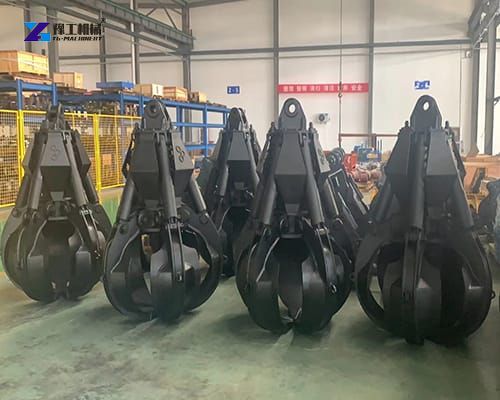
The most immediate benefit is enhanced material grabbing capability. Curved jaw profiles wrap securely around irregular scrap that slides out of standard buckets.
Adaptability represents another major strength. A single grapple can process everything from thin sheet metal and shredded steel scrap up to thick structural steel sections and dismantled vehicle chassis.
Durability directly translates to lower long-term operating expenses. Hardened steel construction reduces structural deformation from repeated impacts.
Safety improvements should never be overlooked. Using a grapple removes workers from direct contact with unstable scrap piles. Controlled hydraulic clamping holds loads stable during lifting and transit, lowering the chance of unexpected load drops.
Rotating grapple designs also reduce the need for excavator repositioning, minimising movement around busy yard areas where ground staff operate.
Common Industrial Applications for Scrap Metal Grapple
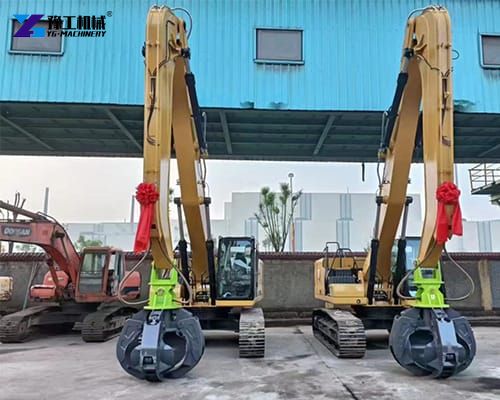
Scrap metal grapples find regular use across a wide spectrum of industrial environments, with metal recycling facilities remaining the largest user group. Inside scrap yards, grapples carry out loading and unloading of delivery trucks, sorting mixed metal piles into separate ferrous and non-ferrous stockpiles.
Demolition contractors rely heavily on scrap grapples during building tear down projects. After structures are dismantled, grapples collect exposed steel reinforcement, metal piping, window frames and structural beams. These materials are sorted on site and loaded directly onto transport trucks to head for recycling centres. Efficient metal recovery improves overall project profitability and supports sustainable construction waste management targets.
Ship dismantling yards present one of the toughest operating environments for grapple attachments. Vessel hulls contain large volumes of steel plate, engine components, piping and miscellaneous metal fixtures. Grapples handle heavy marine scrap while navigating tight spaces within ship interiors.
Vehicle recycling facilities also depend on scrap grapples for processing end-of-life automobiles. After fluid draining and initial dismantling, grapples lift whole vehicle shells, sort engine blocks, and separate metal chassis material from non metallic waste. Some operators pair grapples with mobile metal shears to cut large vehicle frames into transportable sizes on location.
Additional use cases include steel mill raw material handling, warehouse metal stock movement, and waste transfer stations that separate recyclable metals from general waste. Any operation that regularly moves large volumes of loose, irregular metal materials stands to benefit from adding a scrap metal grapple to its equipment lineup.
Factors To Evaluate When Purchasing A Scrap Metal Grapple
Choosing a suitable scrap metal grapple requires careful evaluation of several interlinked criteria. The first consideration is compatibility with your existing excavator carrier. Each model of grapple is designed to work with excavators within defined weight classes. Using an oversized grapple on a small excavator overloads the hydraulic system and lifting capacity, risking machine damage and unsafe operation. Undersized grapples fail to deliver sufficient load volume, limiting daily throughput and wasting available excavator power.
Hydraulic matching ranks equally important alongside carrier weight. Every grapple operates within a defined range of working pressure and hydraulic flow. If the excavator cannot supply the required flow rate, jaw opening and closing speeds become sluggish, slowing each grab cycle. Insufficient working pressure directly reduces clamping force, causing heavy scrap loads to slip during transport. We should cross reference grapple hydraulic specifications with the auxiliary circuit output values listed in their excavator operation manual.
Material type and average load size shape jaw selection between four jaw and five jaw setups. Operations focused on large solid steel components often select four jaw grapples. Facilities handling high volumes of fragmented, small sized scrap gain better containment from five jaw configurations. Many product lines allow us to choose either jaw layout on the same base grapple model to match evolving material requirements.
Maximum jaw opening width and grapple load capacity influence daily operational output. Wider jaw spread enables operators to engage larger piles of material in each grab cycle. Larger capacity units move more scrap per lift, yet we must balance capacity against excavator lifting limits and site access constraints. Compact scrap yards with narrow transport access may find extremely wide grapples difficult to manoeuvre between stockpiles and trucks.
Rotating versus fixed grapple designs represent another critical decision point. Rotating grapples carry higher upfront cost but deliver outstanding flexibility for complex sorting and tight access locations. Fixed grapples suit simple loading operations with consistent working angles and offer a lower entry price for businesses with basic handling requirements.