
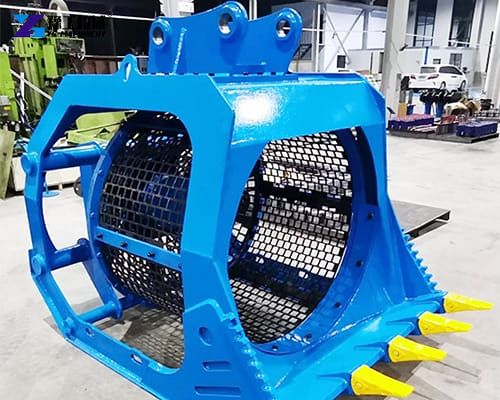
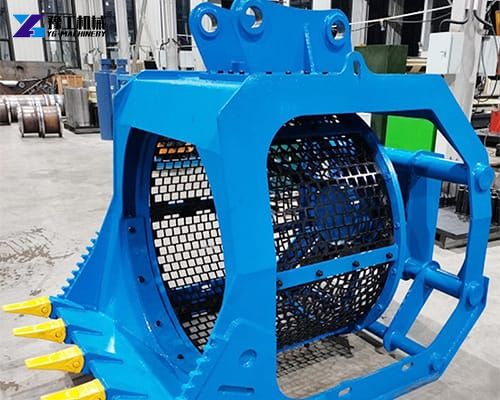
Rotary screening bucket for sale is a hydraulic attachment that combines the functions of a bucket and a material screening unit. Instead of simply digging and carrying material, it uses a rotating screening drum or basket to classify material according to particle size. It is not a crusher, but it can break up clods, blend materials, and produce a consistent end product. The attachment is mounted to the excavator through the appropriate quick coupler, pin connection, or custom mounting interface. Hydraulic oil from the excavator drives the screening mechanism, while interchangeable or replaceable screen sections determine the size of material that can pass through.
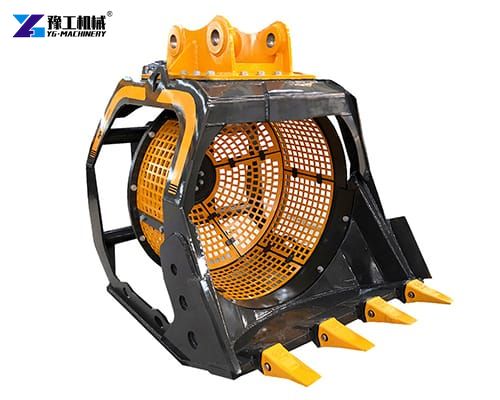
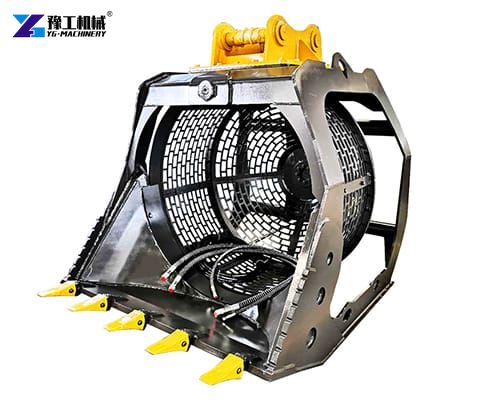
Specifications of Rotary Screening Bucket for Sale
| Model | YG-09 | YG-15 | YG-25 | YG-35 |
| Suitable Excavator | 5-9T | 10-18T | 20-27T | 30-40T |
| Weight | 600KG | 950KG | 1540KG | 2200KG |
| Bucket Volume | 0.26m³ | 0.5m³ | 1m³ | 1.3m³ |
| Working Pressure | 20Mpa | 20Mpa | 20Mpa | 20Mpa |
| Recommended flow rate L/min | 70L/min | 100L/min | 160L/min | 200L/min |
| Screen specifications | 10-80mm | 10-100mm | 10-120mm | 10-140mm |
How Does a Rotary Screening Bucket Work?
The rotary screening bucket for sale works on controlled rotary screening.
After the excavator fills the bucket, hydraulic power turns the internal screening drum. As the drum rotates, material is lifted, tumbled, and redistributed across the screening surface.
Particles smaller than the selected screen openings pass through the mesh or perforated screen. Larger particles remain inside the drum until they reach the discharge area.
The rotating action also helps loosen clumps and distribute material more evenly across the screening surface. This can be particularly useful when processing soil, topsoil, compost, or other materials containing mixed particle sizes.
An excavator screening bucket is therefore more than a simple perforated bucket. Its hydraulic drive, rotating drum, screen configuration, and excavator compatibility work together to provide controlled material classification.
The final screening result depends on several factors, including:
- Screen opening size
- Material moisture
- Feed composition
- Excavator hydraulic flow
- Excavator size
- Drum rotation speed
- Bucket loading method
- Required output grading
Because separation is primarily based on particle size, extremely large or heavily compacted material may require pre-processing before screening.
What Materials Can the Excavator Screening Bucket Process?
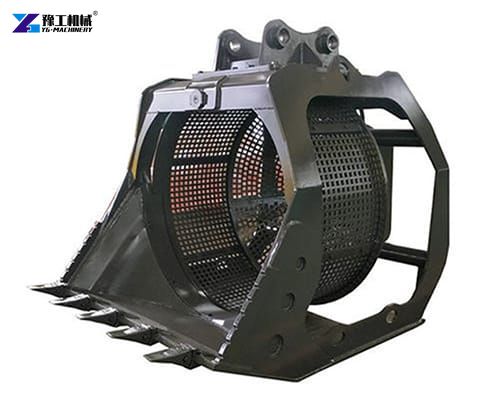
A hydraulic screening attachment can be used for a broad range of materials. The appropriate screen configuration should always be selected according to the application and desired output size.
1. Topsoil and Excavated Soil: Screening excavated soil can remove stones, roots, lumps, and oversized particles to produce a more uniform material for landscaping, backfilling, or site preparation.
2. Sand and Gravel: The rotary screening bucket for sale can classify mixed aggregate into usable fractions, helping contractors recover material directly at the jobsite.
3. Construction and Demolition Waste: Concrete fragments, masonry, and other demolition materials can be screened after suitable size reduction. This can help separate reusable fines from oversized pieces.
4. Compost and Organic Materials: Screening compost, mulch, bark, and similar materials can improve consistency and remove unwanted oversized pieces.
5. Pipeline and Utility Backfill: For trenching projects, screened soil can be reused for backfilling when the required particle size and material specifications are met.
6. Landscaping Materials: Landscape contractors can process soil, gravel, and organic materials without moving every load to a remote screening facility.
10 Core Advantages of an Rotary Screening Bucket
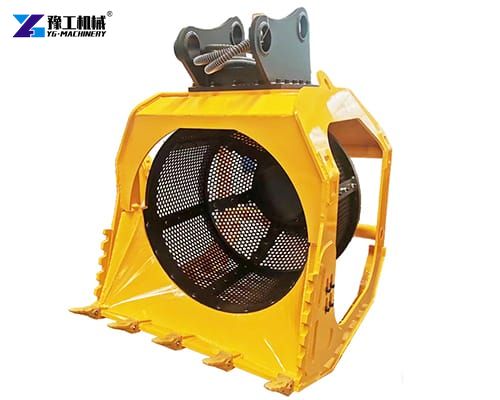
Choosing the right attachment is ultimately about improving the complete material-handling process rather than simply adding another piece of equipment.
1. Screen Material Directly on Site
One of the biggest advantages of an rotary screening bucket for sale is the ability to process material where it is excavated. This can reduce the need to transport raw material to a separate screening location.
2. Reduce Material Handling
Every additional loading, hauling, and unloading stage takes time and equipment. Screening directly with the excavator can shorten the material flow and reduce unnecessary handling.
3. One Carrier, Multiple Functions
The excavator can dig, load, screen, sort, and move material using one carrier machine. This gives contractors greater flexibility when project conditions change.
4. Adjustable Screening Size
Different projects require different output sizes. Replaceable or interchangeable screen sections allow the attachment to be configured for specific screening requirements.
Available opening sizes vary by manufacturer and model, with some systems covering fine screening applications as well as larger aggregate separation.
5. Efficient Material Separation
The rotating drum continuously agitates the material, helping distribute fines across the screening surface. This provides a more consistent separation process than simply shaking a static bucket.
6. Useful for Recycling Applications
An rotary screening bucket for sale can support material recovery and recycling operations by separating reusable soil, aggregate, and other processed materials from oversized waste.
7. Suitable for Different Excavator Classes
Screening buckets are available in multiple sizes for compact excavators, mid-size excavators, and larger construction machines. Selecting the correct carrier class is essential for safe and efficient operation.
8. Mobile Jobsite Operation
Because the screening system travels with the excavator, contractors can move between excavation zones, stockpiles, trenches, and processing areas without relocating a stationary screening plant.
9. Potentially Lower Project Logistics Costs
Reducing hauling distances and secondary material handling can improve overall jobsite efficiency. The actual savings depend on material volume, site layout, labor costs, transport distance, and local operating conditions.
10. Versatile Across Multiple Industries
From earthmoving and landscaping to demolition, recycling, agriculture, and infrastructure work, the attachment can be adapted to different material-processing requirements.
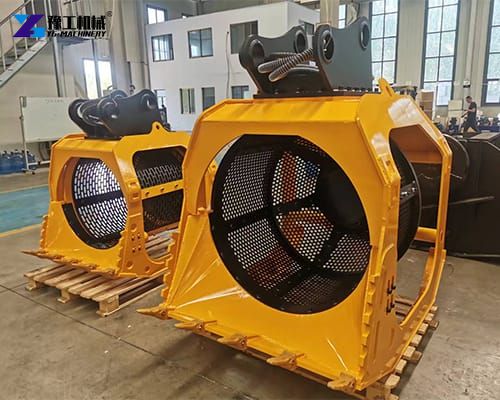
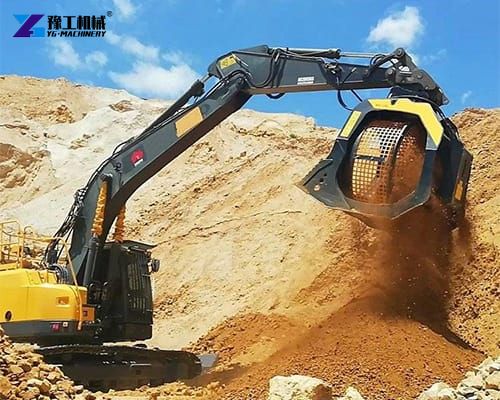
How to Choose the Right Model?
Selecting the right screening bucket should be based on the excavator’s operating weight, hydraulic system, material characteristics, required screening size, and expected workload.
Small Excavators
Compact models are suitable for landscaping, residential construction, utility work, gardening, light soil screening, and smaller renovation projects.
Their smaller dimensions make them easier to operate in confined spaces while maintaining the mobility advantages of an excavator-mounted attachment.
Medium Excavators
Medium-size rotary screening bucket for sale offers a balance between screening capacity, maneuverability, and compatibility with general construction equipment. They are commonly considered for roadwork, site preparation, aggregate handling, and construction projects.
Large Excavators
Heavy-duty models are intended for demanding applications where larger volumes of material must be processed. They can be appropriate for quarry-related work, large construction projects, demolition recycling, and major earthmoving operations.
Before purchasing, verify the carrier’s hydraulic flow, working pressure, lifting capacity, attachment weight, mounting interface, and available auxiliary hydraulic connections.
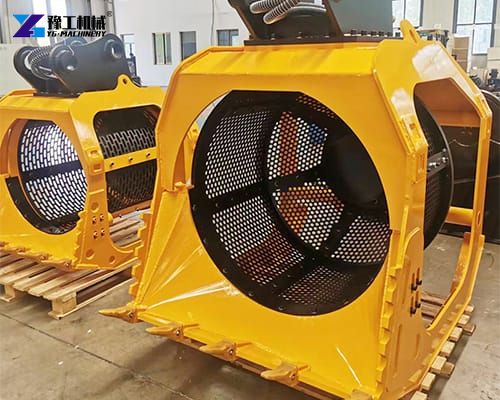
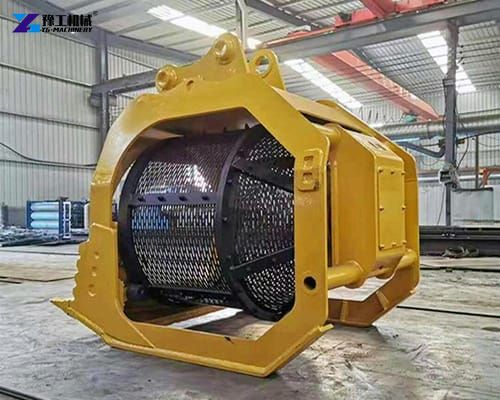
Wide Applications of the Screening Bucket Attachment
Construction Site Preparation
Screen excavated soil and aggregate before using the material for grading, foundations, backfilling, or general site preparation.
Landscaping
Remove rocks and oversized debris from soil to create a more consistent material for planting, lawn preparation, and landscape construction.
Road Construction and Maintenance
Separate aggregates and granular materials for road base, drainage layers, shoulder maintenance, and related applications.
Demolition and Recycling
Process selected demolition materials and separate finer reusable fractions from oversized debris, helping contractors improve material recovery.
Agriculture and Land Improvement
Screen suitable soil and organic materials for land preparation, compost handling, and related agricultural work.
Trenching and Utility Projects
Screen excavated material near the trench and reuse suitable material for backfilling where project specifications allow it.
What to Consider Before Buying?
Before choosing an attachment, consider these factors:
Excavator compatibility: Check operating weight, hydraulic flow, pressure, lifting capacity, and attachment connection.
Material type: Soil, gravel, aggregates, compost, and demolition materials can require different configurations.
Required output size: Determine the particle size you need after screening before selecting the screening configuration.
Expected workload: Consider daily material volume and project duration to select an appropriate bucket size and capacity.
Working environment: Confined sites may require a compact model, while large open sites may benefit from a higher-capacity attachment.
Get the Right Screening Bucket for Your Project
Choosing the right attachment starts with understanding your actual working conditions. Excavator size, hydraulic specifications, material type, required screening size, and expected production volume all influence the ideal configuration.
If you are evaluating a rotary screening bucket for sale, our team can help you identify a suitable model based on your excavator.
Provide your excavator model, operating weight, hydraulic specifications, material type, and desired output size. We will help you determine which option best matches your project.