
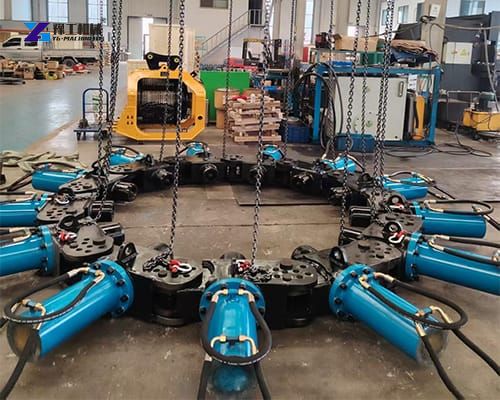
When you step onto a construction site for foundation work, a critical piece of equipment that defines project efficiency is the pile head breaker. This specialized hydraulic tool, also widely known as a hydraulic pile breaker, is engineered to remove excess concrete from the top of foundation piles with precise, controlled force, ensuring the remaining pile body maintains its full structural integrity for subsequent construction stages. How to match the right pile head breaking machine to specific project requirements is a core decision that directly influences construction speed
Every foundation project carries a unique set of variables, from pile diameter and concrete strength grade to the type of carrier equipment available on site and the constraints of the local construction environment. Taking the time to evaluate these variables systematically before making a selection will not only help you avoid costly on-site errors, but also unlock the full operational potential of the concrete pile breaking machine, allowing your team to complete pile breaking work ahead of schedule.
Evaluating Pile Specifications As The Primary Selection Foundation
1. Pile Diameter
The very first step in selecting the right pile head breaker is to gather all accurate, verified data about the piles that will be processed on your construction site, because every technical parameter of the breaker must be matched directly to these pile characteristics to deliver reliable performance. The most fundamental specification you need to confirm is the applicable range of pile diameters that the breaker can handle. Hydraulic pile breaker machine are manufactured in a wide range of sizes, with compact models designed for small piles as narrow as 300 millimeters in diameter, and heavy-duty industrial models capable of processing piles 2500 millimeters in diameter. For example, standard product lines often include models such as YG-800 for 600 to 800 millimeter piles, YG-1300 for 1150 to 1300 millimeter piles and YG-2000 for large diameter piles up to 2000 millimeters. Selecting a breaker that is too small for your pile diameter will leave gaps in the coverage of chisels around the pile, resulting in uneven breaking, incomplete separation and the need for secondary manual finishing work that wastes time and labor. On the other hand, selecting a model that is far larger than your maximum pile diameter will add unnecessary weight, increase hydraulic power demand and raise both purchase cost and operational fuel consumption without delivering any practical benefit.
Specifications of the Pile Head Breaker Machine
| Model | YG-800 | YG-980 | YG-1150 | YG-1300 | YG-1500 | YG-1650 | YG-1800 | YG-2000 | YG-2150 | YG-2300 | YG-2500 |
| Applicable pile diameter | 600-800mm | 800-900mm | 1100-1150mm | 1150-1300mm | 1300-1500mm | 1500-1650mm | 1650-1800mm | 1800-2000mm | 2000-2150mm | 2150-2300mm | 2300-2500mm |
| Number of modules | 8 | 9 | 10 | 11 | 12 | 13 | 14 | 15 | 16 | 17 | 18 |
| Machine weight | 2400kg | 2700kg | 3000kg | 3300kg | 3600kg | 3900kg | 4200kg | 4500kg | 4800kg | 5100kg | 5400kg |
| Applicable excavator model | 20-30T | 20-30T | 20-30T | 30-40T | 30-40T | 30-40T | Hydraulic pump station | Hydraulic pump station | Hydraulic pump station | Hydraulic pump station | Hydraulic pump station |
| Cylinder stroke | 250mm | 250mm | 250mm | 250mm | 250mm | 250mm | 250mm | 250mm | 250mm | 250mm | 250mm |
| Working pressure | 35Mpa | 35Mpa | 35Mpa | 35Mpa | 35Mpa | 35Mpa | 35Mpa | 35Mpa | 35Mpa | 35Mpa | 35Mpa |
| Oil storage capacity of a single module | 5L | 5L | 5L | 5L | 5L | 5L | 5L | 5L | 5L | 5L | 5L |
| Breaking force | 70T | 70T | 70T | 70T | 70T | 70T | 70T | 70T | 70T | 70T | 70T |
2. Concrete Strength
Not all concrete is created equal. Foundation piles can range from standard commercial grade mixes to ultra-high-performance concrete used in marine or heavy seismic zones. You must know the compressive strength (measured in Megapascals or psi) of the concrete you are dealing with. A standard pile head breaker is engineered to handle typical structural concrete strengths, but if your project involves exceptionally hard or fiber-reinforced concrete, you will need a pile breaker with higher cylinder thrust force.
3. Pile Shape
Most standard breakers are optimized for round concrete piles, which are the most common type used in foundation construction, but many modern projects also use square piles, rectangular piles and even special shaped piles for specific engineering requirements. If your project includes non circular piles, you need to select a pile head breaker that is specifically designed or adapted to handle that pile shape, ensuring that the chisels are positioned at the correct intervals across the entire perimeter of the pile to deliver even force distribution.
4. The Configuration of the Internal Reinforcement
The configuration of internal rebar is another important consideration, because piles with extra thick reinforcement or a higher density of rebar will require the breaker to deliver more consistent breaking force to separate the concrete without bending or snapping the rebar prematurely. For projects with heavily reinforced piles, you should prioritize modelsthat use high hardness, wear resistant chisels
5. Excavator Compatibility and Hydraulics
A pile head breaker is only as good as the carrier machine powering it. These units are typically suspended from excavators. You must cross-reference the operating weight of the carrier with the weight of the pile breaker.
- Weight Ratio: If the breaker is too heavy for the excavator, it will destabilize the machine or strain the boom. If it is too light, it may lack the necessary downward stability.
- Hydraulic Flow and Pressure: Pile breakers rely on the excavator’s auxiliary hydraulic system to drive the cylinders. Check the required operating pressure (typically measured in Bar or PSI) and oil flow rate (liters per minute). Ensure your excavator’s auxiliary circuit can match these specifications without overheating or starving the attachment. Quick-coupler compatibility and hose sizing also play a crucial role in seamless on-site operation.
6. Site Constraints and Environment
- Urban Settings: If you are working in a densely populated downtown area, noise ordinances and vibration restrictions are strict. Hydraulic pile breakers are inherently much quieter than pneumatic hammers.
- Restricted Access: Tight spaces, low overhead clearances, or offshore marine barges require compact, highly maneuverable units that can be rigged quickly and operated efficiently in cramped conditions.
Types Of Pile Head Breakers On The Market
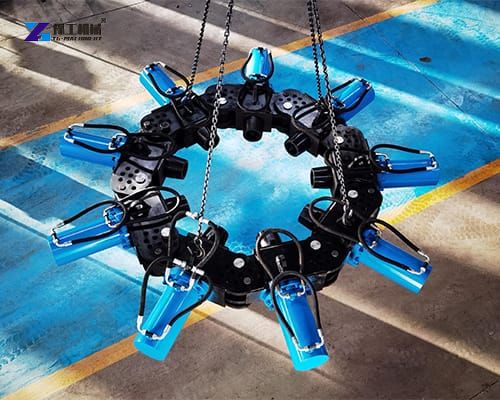
Understanding the market landscape will help you filter through manufacturer brochures and marketing claims. Here are the primary types of pile head breakers available today:
- Modular Hydraulic Circular Pile Breakers
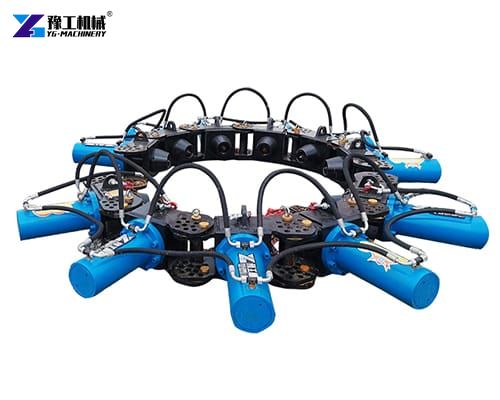
These are the industry workhorses. Composed of interchangeable chain links, they can be assembled into various circle diameters in a matter of minutes using simple pin-and-cotter connections. They are versatile, highly efficient, and ideal for large-scale housing developments, highway bridges, and commercial foundations featuring hundreds of round bored piles. - Non-Modular Square And Rectangular Pile Breakers
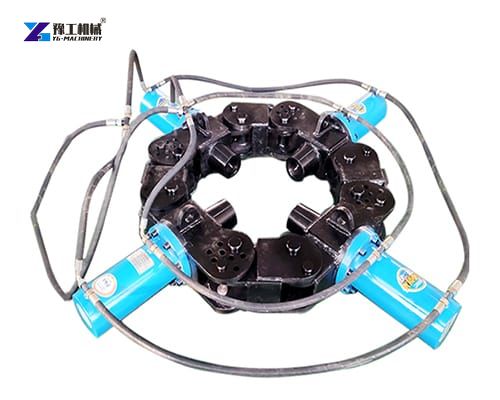
Designed specifically for precast concrete piles or square cast-in-place columns, these systems use specific rigid frames or adjustable multi-cylinder banks that press inward against the four flat faces of the pile. They ensure uniform fracturing along rectangular edges where circular breakers would leave corners unchipped.
Step-By-Step Selection Checklist
To summarize your purchasing journey, run through this practical checklist before signing any purchase order or rental agreement:
Step 1: Audit your project specifications. List all pile diameters, shapes, concrete strengths, and rebar arrangements required across the entire job.
Step 2: Inspect your available carrier fleet. Note the excavator weight classes, lifting capacities, and auxiliary hydraulic flow rates available on site.
Step 3: Determine the operational environment. Assess whether you face noise restrictions, space limitations, or marine/offshore conditions.
Step 4: Shortlist models. Filter for units that match your diameter range and carrier requirements, ensuring modular flexibility if you have varied pile sizes.
Step 5: Evaluate after-sales support. Confirm warranty terms, spare part availability, and technical guidance support.