
If you’re deciding between concrete pile breakers and excavator breaker hammers for your project, understanding their core differences helps you pick the right tool for the job. Here’s a concise comparison to help you choose.
What Is a Concrete Pile Breaker?
A concrete pile breaker is a specialized construction machine designed specifically to remove the excess concrete from cast-in-place piles and foundation piles. After piles are installed, the upper section often needs to be trimmed to a specified elevation before connecting to pile caps or other structural components. Traditional pile cutting methods involve manual labor, pneumatic tools, or jackhammers, which can be time-consuming, labor-intensive, and potentially damaging to the reinforcement bars inside the pile. Concrete pile breakers provide a more efficient and precise solution by breaking the pile head uniformly while preserving the integrity of the reinforcement steel
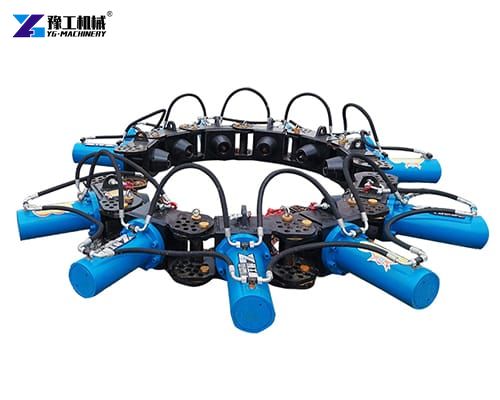
These machines are commonly used in:
Bridge construction
high-rise building foundations
Railway projects
Marine construction
Infrastructure development
Deep foundation engineering
What Is Excavator Breaker Hammer?
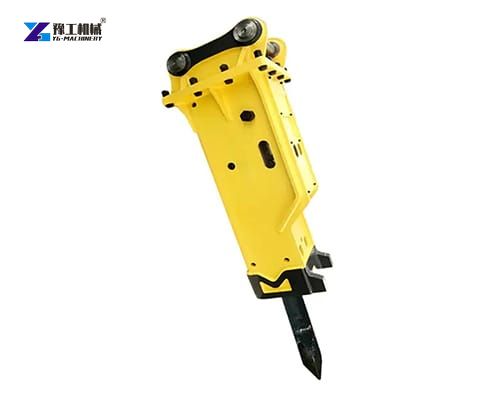
An excavator breaker hammer, also known as a hydraulic breaker hammer, is a powerful demolition attachment mounted on excavators, skid steer loaders, or backhoes. It uses hydraulic energy to generate repeated impact forces that break hard materials such as concrete, rock, asphalt, and masonry.
Hydraulic breaker hammers are widely used in demolition, mining, quarrying, road construction, and excavation projects. Their primary purpose is to fracture and remove hard materials quickly and efficiently.
Typical applications include:
- Building demolition
- Rock excavation
- Road maintenance
- Tunnel construction
- Mining operations
- Concrete structure removal
Difference Between Concrete Pile Breakers and Excavator Breaker Hammers
| Difference | Concrete pile breakers | Excavator breaker hammers |
| Primary purpose | Designed specifically to break and reduce concrete piles with minimal dust and controlled fragmentation. | General-purpose impact hammers used for breaking hard materials, including concrete and rock, with more aggressive breaking action. |
| Break mechanism | Use a series of chisel-like anvils and slots to fracture concrete along the pile, often with a guided, incremental process. | Deliver high-energy impacts to the target material via a piston, producing rapid, forceful blows. |
| What they are best for | Ideal for in-situ pile removal, decommissioning piles in tight spaces, and situations where you want to reduce vibration and dust while controlling breakage. | Best for heavy-duty demolition, rock breaking, fast removal of concrete in large areas, and tasks requiring high impact energy. |
| Impact on surroundings | Generally produce less vibration and noise than conventional breakers, with a focus on controlled fragmentation. Can reduce dust with proper technique and water suppression. | Often generate significant vibration and noise; dust levels depend on the tool, settings, and mitigation measures such as water suppression and dust collection. |
| Working principle of concrete pile breakers | Concrete pile breakers use multiple hydraulic cylinders arranged in a modular configuration. Each cylinder applies a controlled force around the circumference of the pile. The hydraulic pressure causes the concrete to crack and separate in a uniform manner. The machine gradually breaks the pile head layer by layer until the desired cut-off level is reached. One of the biggest advantages of this process is that the reinforcement bars remain intact and undamaged, allowing them to be integrated into subsequent foundation structures. The modular design allows contractors to adjust the machine size according to pile diameter requirements. | Excavator breaker hammers operate using a piston mechanism powered by hydraulic oil supplied from the carrier machine. The hydraulic system drives a piston that repeatedly strikes a tool bit at high speed. The impact energy is transferred directly to the target material, causing it to crack and fracture. Different from pile breakers, hydraulic breaker hammers concentrate force on a single point, making them highly effective for breaking extremely hard materials. |
Conclusion
Although concrete pile breakers and excavator breaker hammers both interact with concrete structures, they serve fundamentally different functions in construction projects. Concrete pile breakers are specialized tools designed for precise pile head removal while preserving reinforcement bars. They offer superior efficiency, safety, and quality for foundation construction applications. Excavator breaker hammers are versatile demolition tools capable of breaking concrete, rock, asphalt, and other hard materials through powerful impact energy. They excel in demolition, excavation, mining, and road construction projects. Understanding the difference between these two machines helps contractors select the most appropriate equipment, improve productivity, reduce operational costs, and achieve better project outcomes. For foundation work involving pile trimming, a concrete pile breaker is the preferred solution. For general demolition and rock-breaking tasks, a excavator breaker hammer remains a good choice. Choosing the right tool for the right job is ultimately the key to construction efficiency and long-term project success.