Choosing the right tool is not only a matter of efficiency, but also it is a matter of project survival.
Chapter One: The Goldilocks Principle Of Pile Diameters
The first and most crucial step in our journey is understanding the size of the beast we are hunting. Concrete piles are not a one-size-fits-all proposition. They range from slender, delicate columns in tight urban spaces to massive, towering monoliths supporting immense bridge structures.
We must match the crushing apparatus to the foundation. It must fit perfectly to work correctly. If the pile breaker is too small for the concrete column, it will choke, overheat, and fail to break the material efficiently. Conversely, a massive unit on a small pile is akin to using a sledgehammer to crack a walnut. It is clumsy, wasteful, and unnecessarily expensive to operate.
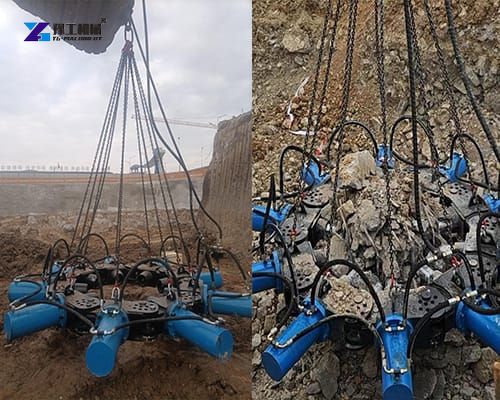
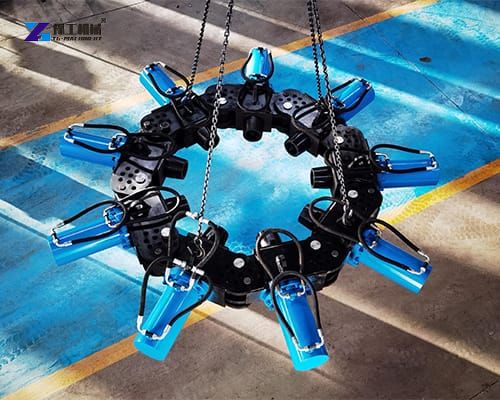
The modular hydraulic pile breakers are designed to accommodate a vast spectrum of diameters. Whether we are dealing with a modest 600 millimeter pile or a gargantuan 2500 millimeter column, there is a modular configuration tailored for the job. By adding or removing individual breaking modules, the machine adapts to the exact circumference of the pile, wrapping around it like a high tension steel embrace. This adaptability ensures that the breaking force is distributed evenly, preventing the pile from shattering unevenly and leaving a clean, level cut.
Chapter Two: The Power Source And The Weight Equation
Once we have identified the dimensions of the concrete adversary, we need to consider the muscle required to deliver the blow. The hydraulic pile breaker does not work on magic; it operates on immense hydraulic pressure. This power can be delivered in two primary ways, either directly from the host excavator or through a dedicated, independent hydraulic pump station.
When choosing the power source, we need to look closely at the existing fleet. The weight of the modular hydraulic pile breaker is directly proportional to its size and the number of modules it employs. A smaller eight-module unit might weigh around 2400 kilograms, perfectly suited for a standard twenty-ton excavator. However, as we scale up to an eighteen-module configuration capable of handling massive diameters, the weight balloons to 5400 kilograms.
At this upper echelon, a standard excavator might struggle to maintain stability while swinging the heavy attachment. Therefore, for the larger configurations, an independent hydraulic pump station becomes the lifeblood of the operation. This external power unit not only provides the necessary high flow and pressure to drive the massive cylinders but also protects the host excavator’s hydraulic system from the intense continuous stress of demolition work. It is a separation of powers that ensures the longevity of our entire fleet.
Chapter Three: The Mechanics Of The Crush
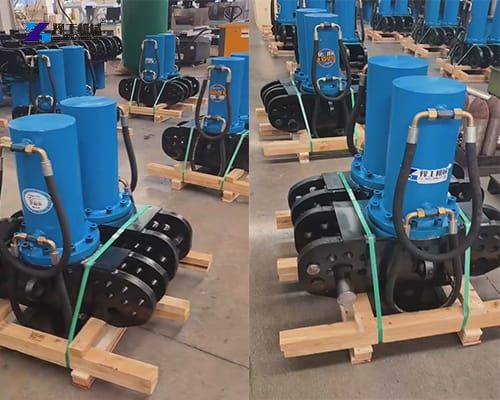
Understanding the internal workings of the concrete hydraulic pile breaker will make us a better operator and a smarter purchaser. The magic happens through a series of synchronized hydraulic cylinders. When activated, these cylinders drive steel wedges into the concrete structure.
The specifications of these cylinders are the blueprint for performance. A typical cylinder stroke of 250 millimeters allows the wedges to penetrate deeply into the concrete core in a single pass. This is not a gentle tapping; it is a sudden and violent application of force. The working pressure, often reaching around 35Mpa, is channeled into a colossal crushing force.
When we see a machine boasting a 70-ton breaking force, we are looking at a device that can pulverize high-grade reinforced concrete in mere seconds. The individual modules operate independently but in perfect unison. Each module houses its own sealed oil storage, typically around 5 liters, ensuring that the hydraulic pressure is maintained evenly across the entire chain of modules. This localized oil supply prevents pressure drops at the far ends of the machine, guaranteeing that the pile is crushed simultaneously from all sides. Furthermore, if one module happens to suffer a hydraulic leak or mechanical failure, the rest of the unit can often continue to function, allowing you to finish the current pile before conducting repairs.
Chapter Four: The Logistics Of Modularity
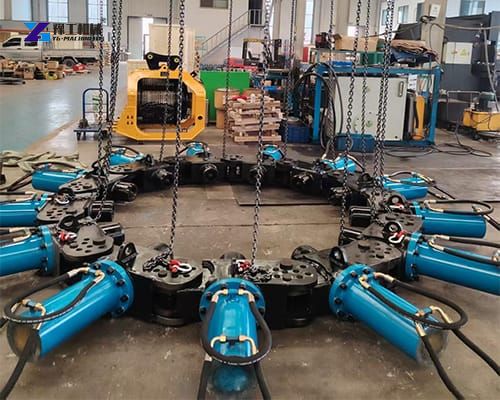
Because it is constructed from individual, manageable segments, it can be transported in the back of a standard flatbed truck. Moreover, the modularity extends the lifespan of your investment. Construction is a brutal environment. Accidents happen. If a single tooth breaks or a cylinder blows a seal on a monolithic unit, the entire machine is out of commission. With a modular system, you simply detach the damaged segment, replace it with a spare, and get back to work. The machine is essentially a customizable toolkit for demolition, capable of being stripped down for maintenance or expanded for a larger project.
Chapter Five: Choosing The Right Match For Your Excavator
The synergy between your excavator and the modular hydraulic pile breaker is the cornerstone of an efficient operation. Ensure that your carrier can comfortably lift, position, and operate the breaker without tipping.
For lighter applications, such as municipal projects with smaller piles, a twenty- to thirty-ton excavator is the perfect dance partner. It provides enough hydraulic flow and lifting capacity for the smaller eight and nine-module breakers. As the scale of the project expands, so too must the carrier.
Always consult the load charts of the excavator and account for the weight of the pile breaker at its furthest reach. Remember, we are not just lifting dead weight; we are applying massive crushing forces while the attachment is extended. Stability is paramount. A slight miscalculation in the weight matching can lead to catastrophic tipping accidents on the job site.
Chapter Six: The Art Of Application
Selecting the machine is only half the battle. The way you apply the modular hydraulic pile breaker determines the quality of the final cut. The goal is to expose the reinforcing steel rebar cleanly, leaving it ready for integration into the new foundation, without cracking the concrete below the desired cut line.
To achieve this, the pile breaker must be positioned perfectly horizontally. The operator must bring the excavator into position, open the modular arms, and lower the machine gently over the concrete pile until the wedges are perfectly aligned with the horizontal breaking plane. Once activated, the crusher wraps around the pile and applies uniform force. The concrete fractures, and the rebar is left standing proud.
Rushing the alignment or attempting to break a pile at an angle will result in messy fractures, damaged rebar, and the need for costly secondary processing. Patience and a steady hand on the joysticks.